SMT Solder Paste Manufacturers.

Focused on SMT soldering processes, a one-stop electronic soldering solutions provider.

Here you can find knowledge about Solder Ball Suppression Solder Paste, including but not limited to usage methods, installation techniques, troubleshooting and more. Focused on SMT soldering processes. If you can't find what you need, please contact us anytime.
During the soldering process of OSP boards, pad oxidation is the main cause of cold solder joints and poor wetting. Reasonably setting the reflow profile can effectively suppress copper surface oxidation, with the key being to control the heating rate, shorten the high-temperature exposure time, and ensure the peak temperature accurately falls within the 195℃~210℃ range. Production line verification by Jiajinyuan shows that when the TAL time exceeds 60 seconds or the peak temperature exceeds 212℃, the decomposition of the OSP film accelerates, and the risk of pad oxidation increases sharply.
Published: 2017-08-04Solder ball issues are mostly caused by excessive solder paste volume, unreasonable stencil aperture design, or excessively fast ramp-up rate during reflow soldering, and these three factors often interact in actual production lines. For Jiajinyuan solder paste, when the stencil thickness is 0.12mm, if the aperture area ratio exceeds 0.65 and the ramp-up slope before the peak temperature exceeds 3℃/s, isolated solder balls with a diameter of 40–80μm are extremely likely to form at the edges of CHIP component pads.
Published: 2017-07-31Solder manufacturers provide free sample mailing services to help SMT engineers verify the soldering yield of solder paste, solder wire, or lead-free solder bars in the actual production line environment, avoiding typical defects such as cold solder joints, poor wetting, and solder ball splashing after batch introduction. Jia Jinyuan, a solder manufacturer with 20 years of focus on SMT process supporting, provides samples of all series specifications to match mainstream stencil apertures and reflow soldering profiles.
Published: 2017-07-17Solder paste must balance low spatter, fast melting, strong wetting, and high residue stability in both laser soldering and Hotbar thermocompression soldering. Hotbar solder paste must maintain sharp, non-sagging edges after ultra-thin 0.15mm printing, while laser soldering paste must complete melting within 300ms at a power density of 1200W/cm2 without oxidation black spots.
Published: 2017-07-04Solder dross is continuously generated during wave soldering machine operation and floats on the surface of the molten solder bath. If not removed in time, it will cause intensified liquid level fluctuations, increased risk of nozzle clogging, and frequent solder spikes and bridging on solder joints. Regular dross removal is a key action to ensure consistent wave height and soldering yield. Production line verification by Jiajinyuan shows that manual dross removal every 4 hours can stably control the thickness of solder dross within 3mm.
Published: 2017-06-15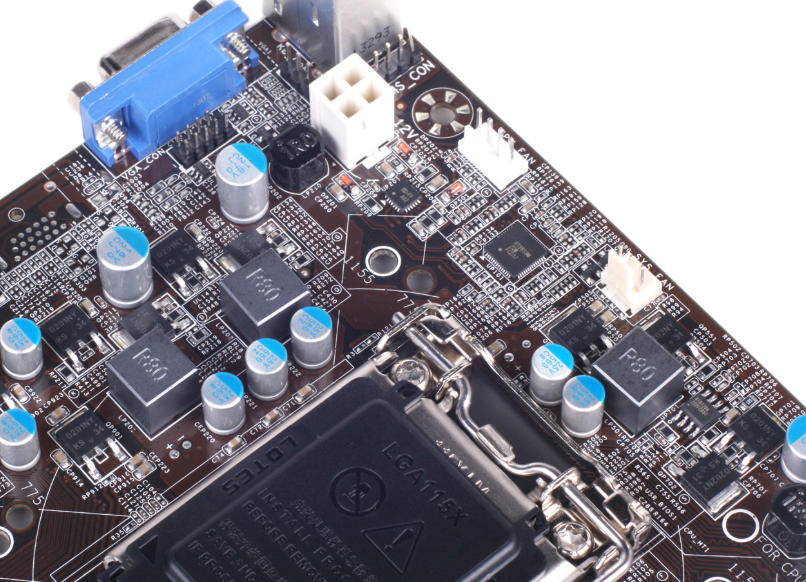
Whether to choose solder wire or solder ribbon for manual welding is essentially a process matching issue. Solder wire is suitable for welding large solder joints and high-heat components, while solder ribbon, with its thinner flux core and more controllable solder output, is adapted for tiny surface-mount components such as 0402 and 0603. The selection of wire diameter must be comprehensively determined by considering the soldering iron power, pad size, and the operator's proficiency level.
Published: 2017-06-11The solder for industrial control motherboards is specifically designed for high-reliability soldering of industrial control motherboard PCBA. It features excellent wettability, low void rate, and strong thermal cycle resistance, meeting the demands of harsh scenarios such as wide temperature range, long service life, and vibration resistance. It is a core material for ensuring the long-term stability of solder joints on industrial control motherboards.
Published: 2017-06-01During the BGA welding rework and ball mounting process, the molding stability of solder paste directly determines the ball mounting yield and subsequent reflow soldering reliability. Jiajinyuan solder paste demonstrates excellent anti-offset capability in 0.3mm pitch BGA ball mounting. The synergistic control of its thixotropic index and pre-reflow collapse amount keeps the center offset of the solder balls stably controlled within ±15μm.
Published: 2017-05-28High-viscosity solder paste significantly improves the placement offset issues of 0201, 0402 and other tiny components as well as irregular devices in SMT production, and is especially suitable for complex scenarios such as double-sided reflow, stepped stencils, and high-density board layouts. Its characteristics of strong thixotropy, low slump rate, and long room-temperature holding time reduce the component displacement rate during the solder paste placement process by more than 40%, while easing the pressure on the waiting window from after printing to before placement.
Published: 2017-04-26SMT stencils are core consumables in the SMT solder paste printing process. Their aperture size, thickness, surface treatment, and tension state jointly determine the stability of solder paste transfer volume. Jiajinyuan SMT stencils, through laser cutting precision control and electropolishing process optimization, achieve a solder paste transfer rate of over 92% at a thickness of 0.12mm, effectively suppressing common high-frequency production line defects such as insufficient solder, solder bridging, and edge burrs.
Published: 2017-04-18Our technical team is always ready to provide professional solder material selection advice and SMT process solutions.