SMT Solder Paste Manufacturers.

Focused on SMT soldering processes, a one-stop electronic soldering solutions provider.

Here you can find knowledge about Hand Dip Furnace Solder Bar, including but not limited to usage methods, installation techniques, troubleshooting and more. Focused on SMT soldering processes. If you can't find what you need, please contact us anytime.
Selecting and handling solder paste for fine pitch SMT assembly demands precise control over rheology, metal content, particle size distribution, and storage conditions, where even minor deviations—such as a 0.5°C shift in refrigeration temperature or a 5° increase in stencil aperture ratio—can trigger bridging on 0.4mm pitch QFNs or insufficient fill on 0.3mm CSPs, and real-world success hinges on strict adherence to paste shelf life, controlled ambient humidity below 60% RH during printing, and consistent squeegee pressure between 4.5–6.5 kg/cm² across all production shifts.
Published: 2026-10-10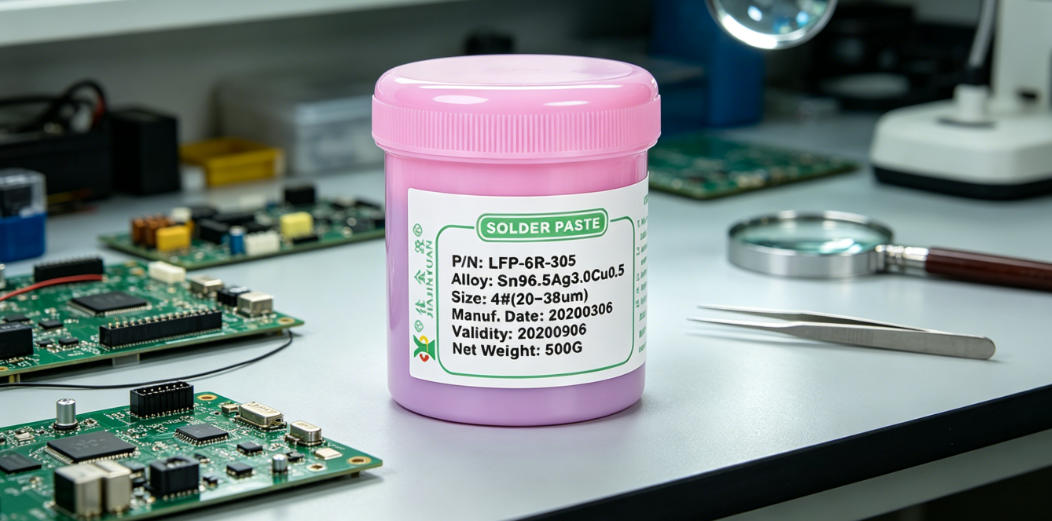
Solder paste hardening treatment requires corresponding measures based on the specific cause, including checking storage conditions, adjusting printing parameters, and using dedicated softeners, to ensure production efficiency and soldering quality.
Published: 2026-08-28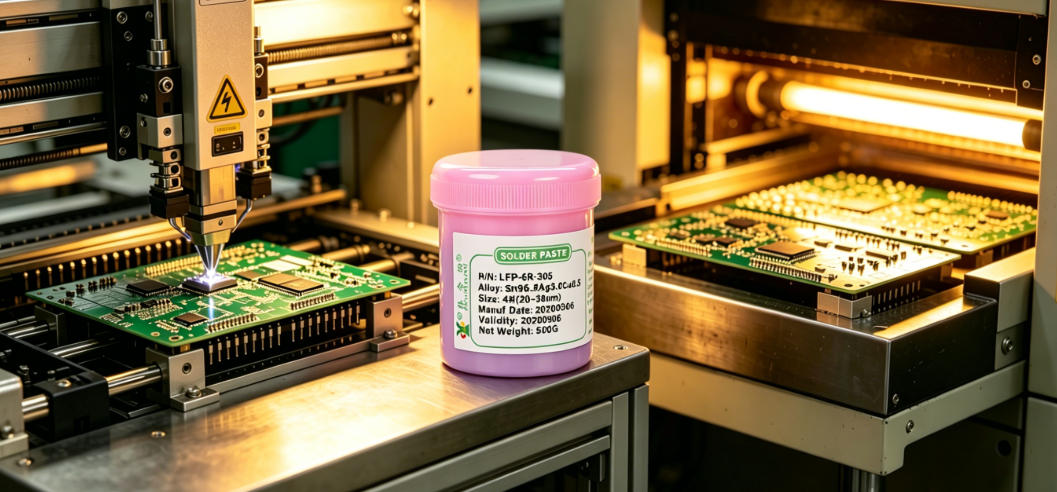
Manual soldering with low-temperature solder paste requires attention to temperature control and operational details to ensure soldering quality and safety. Select an appropriate soldering station and soldering tip; the preheating time should not be too long to avoid oxidation affecting adhesion.
Published: 2026-08-28
Solder paste becoming watery is a common problem in SMT production, and improper handling can lead to soldering defects. By controlling ambient humidity, optimizing storage conditions, and adjusting printing parameters, the phenomenon of solder paste becoming watery can be effectively reduced, thereby improving soldering quality.
Published: 2026-08-28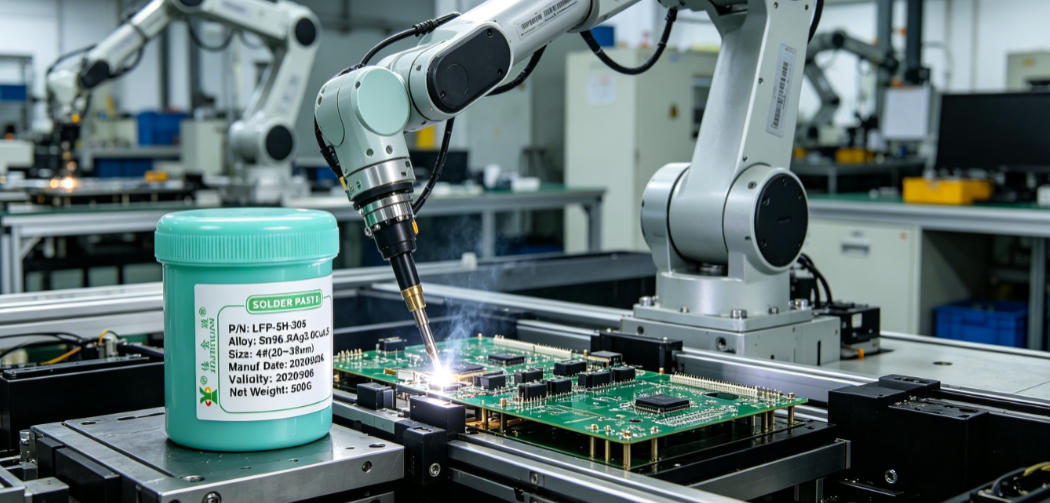
In manual soldering, the diameter of solder wire directly affects solder joint quality and material cost. An excessively large diameter easily causes bridging, cold solder joints, and flux waste, while an excessively small diameter leads to insufficient tinning and a higher rework rate. Considering component pad size, pin pitch, and operator proficiency, 0.3mm is recommended for 0402/0603 chip resistors and capacitors, 0.5mm covers medium and low-density packages such as SOP-8/SSOP-16, and 0.8mm is suitable for power devices and through-hole components. This selection strategy has been verified in production line tests to reduce the cost of solder consumables per joint by 17% and cut rework labor hours by 23%.
Published: 2026-08-27
Addressing the pain points of high manual soldering costs and high rework rates for multi-pin connectors, this summary focuses on optimizing the practical wire feeding methods for solder wire, and proposes 6 immediately implementable cost-reduction actions, covering key links such as soldering tip selection, flux dosage control, and solder feeding rhythm adjustment. A single action can reduce the manual time for a single solder joint by up to 32%, saving over 1400 hours of rework time annually.
Published: 2026-08-27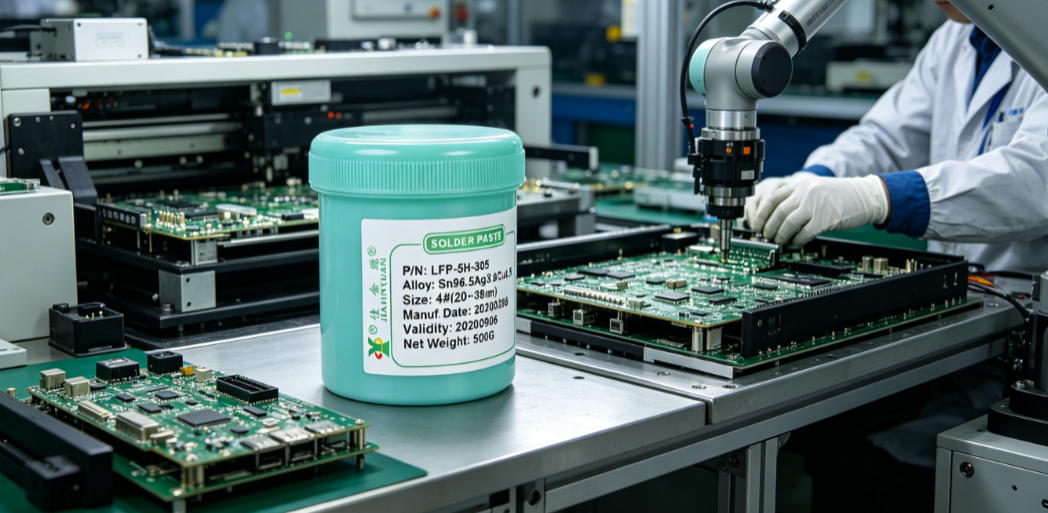
Excessive post-solder residues from halogen-free solder paste is a common pain point in SMT production lines, as it is difficult to clean and prone to causing excessive ionic contamination or false ICT test results. Selecting a matching water-based cleaning agent and optimizing cleaning process parameters can control surface ionic residue within 0.28μg/cm2 NaCl equivalent, significantly improving the yield and long-term reliability of high-density PCBA.
Published: 2026-08-27The viscosity of solder paste fluctuates sharply, directly affecting soldering quality and production efficiency. By observing the condition of the solder paste, using testing tools, and applying adjustment methods, problems can be quickly identified and resolved to ensure process stability.
Published: 2026-08-24
ForLow-temperature tin wireDuring the usage process, there are problems such as the soldering iron t
Published: 2026-05-12PCB pad treatment is a critical step in the SMT process to prevent oxidation-related failures. Strongly coupled control must be established among OSP film integrity, nitrogen storage duration, temperature and humidity thresholds, and turnaround timeliness. Production line tests by Jiajinyuan show that ENIG pads exposed for over 48 hours already exhibit significant poor wetting before reflow, while boards that undergo standardized PCB pad treatment and are stored in nitrogen cabinets with levels below 400 ppm maintain a stable first-pass soldering yield of over 99.7%.
Published: 2019-07-04Our technical team is always ready to provide professional solder material selection advice and SMT process solutions.