SMT Solder Paste Manufacturers.

Focused on SMT soldering processes, a one-stop electronic soldering solutions provider.

Here you can find knowledge about Board Cleaner, including but not limited to usage methods, installation techniques, troubleshooting and more. Focused on SMT soldering processes. If you can't find what you need, please contact us anytime.

A precise, step-by-step solder paste printing setup guide tailored for thin PCBs, emphasizing real-world process stability, void minimization, and consistent transfer efficiency; highlights halogen-free, zero-halogen, water-washable, and laser-compatible solder paste series with verified alloy melting points, wetting performance up to 100%, and proven cold/hot slump resistance under high humidity—designed for SMT engineers working with QFN/DFN, mobile devices, automotive lighting, and ultra-thin flex boards.
Published: 2026-10-29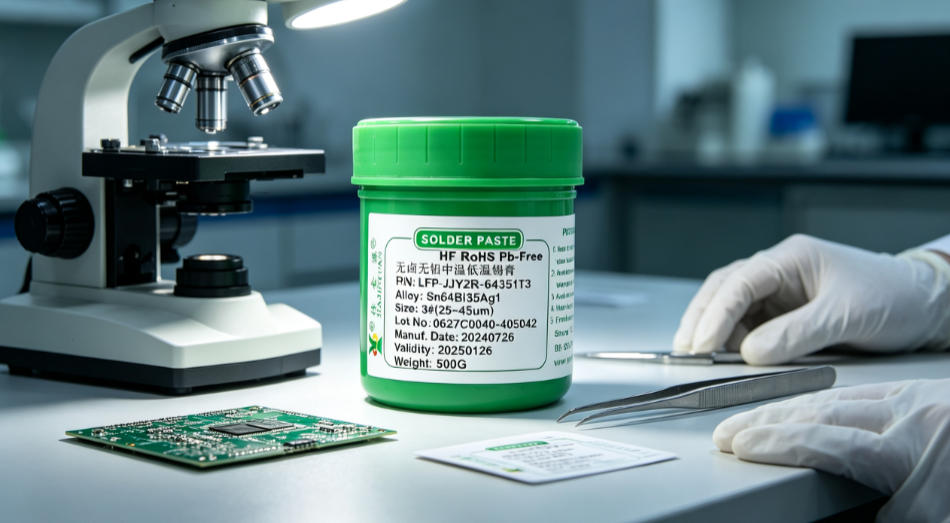
Solder paste printing on circuit boards is a key step in the SMT process, directly affecting soldering quality and production efficiency. By selecting the appropriate solder paste type, controlling printing parameters, and optimizing operational procedures, product yield can be effectively improved.
Published: 2026-08-28
Lead HASL and lead-free HASL each have their own advantages in printed circuit board manufacturing, and the selection should be based on process requirements and environmental regulations. Lead HASL offers stable soldering performance but poses environmental risks, while lead-free HASL complies with regulations but imposes higher requirements on equipment and process control.
Published: 2026-08-28
New energy circuit boards have extremely high requirements for soldering reliability; even a slight deviation in the selection of solder paste and solder wire can cause batch defects such as cold solder joints, bridging, and excessive voiding rates. Combined with real production line failure cases, this article directly addresses core pain points such as insufficient solder paste activity matching, mismatched silver content in solder wire, and lack of coordination between reflow profile and solder paste melting point, and provides immediately executable material verification processes and parameter locking methods.
Published: 2026-08-27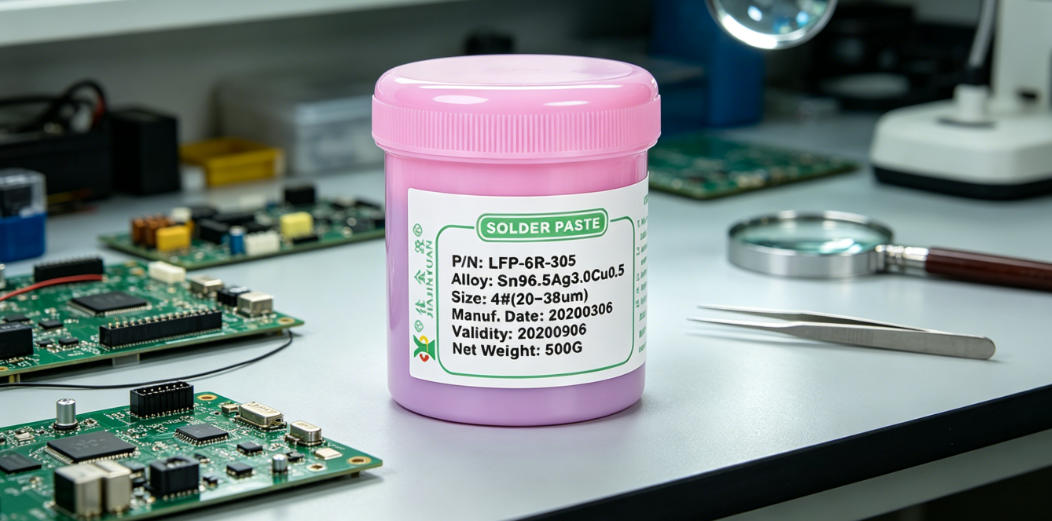
SMT soldering of industrial control boards is highly sensitive to the technical specifications of solder paste. Since industrial control boards generally feature large-area copper foils, multilayer thick boards, high-TG substrates, and fine-pitch components such as BGA/CSP, defects including printing slump, reflow voids, and poor wetting occur frequently. Viscosity, metal content, particle size distribution, flux activity, and residue insulation in the technical specifications of solder paste directly determine the first-pass yield and long-term reliability.
Published: 2026-08-27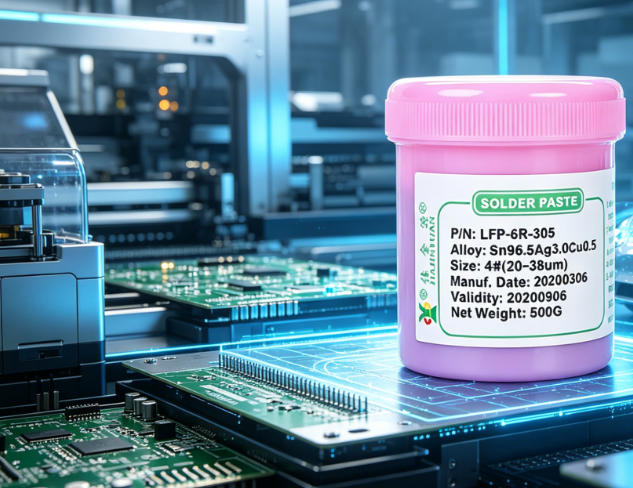
Poor solder paste wettability during SMT soldering on thick gold PCBs commonly manifests as solder joint voids, insufficient solder climb, or local dewetting. The root cause is excessive gold layer thickness leading to nickel layer passivation and excessive consumption of flux activity. Evaluation requires comprehensive judgment by combining wetting angle measurement, microscopic observation of solder joint morphology, and IMC growth state after reflow. The matching between thick gold PCBs and solder paste wettability is a key process control point to ensure first-pass yield.
Published: 2026-08-27
Welding of FPC flexible boards is highly sensitive to solder paste printing accuracy and mounting pressure. Based on a review of real production line failures, this paper horizontally compares the occurrence rates of bridging, tombstoning, and cold soldering under different solder paste viscosities, metal contents, thixotropic properties, and various mounting pressure ranges (0.15N~0.6N) in typical scenarios such as fine-pitch ICs, double-sided pads, and high-density blind/buried via FPCs. It is clarified that for solder paste printing, models with 4# powder, 88.5% metal content, viscosity of 220Pa·s, and thixotropic index >4.2 should be prioritized, while mounting pressure must be dynamically set according to pad size, and must not be uniformly set to 0.3N.
Published: 2026-08-27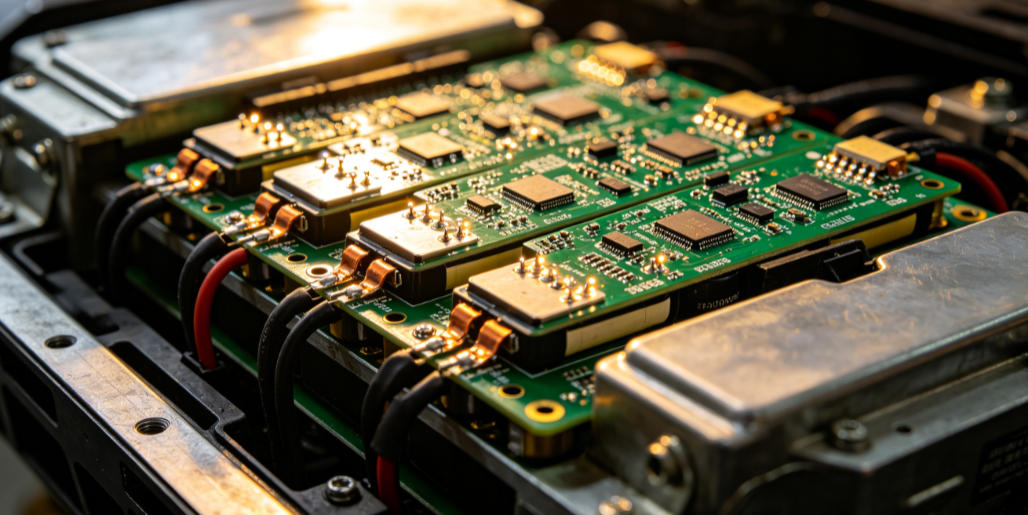
In the mixed assembly board SMT process, the combined use of solder paste and manual solder wire can easily cause hidden defects such as cold solder joints, bridging, and thermal damage. Based on 20 years of practical production line experience, this article directly addresses five high-frequency pitfalls in the mixed use of solder paste and solder wire: improper stencil aperture design, conflicting reflow temperature windows, mismatched manual repair soldering timing, misjudgment of flux compatibility, and uncontrolled thermal stress superposition. Each pitfall includes its symptoms, hazards, root causes, and countermeasures, avoiding the substitution of theory for on-site judgment.
Published: 2026-08-27
SMT for automotive industrial control boards has extremely high requirements for soldering reliability; even minor deviations in solder paste control can trigger batch defects such as cold solder joints, solder bridges, and tombstoning. This article directly addresses real-world misconceptions on the production line, covering five high-incidence issues: temperature control failure during solder paste storage, insufficient reflow time, mismatched squeegee pressure, mismatch between stencil aperture design and solder paste particle size, and excessive dwell time after printing. Each point is derived from measured failure cases, emphasizing that solder paste control in industrial control board SMT must run through the entire process from material requisition to component placement.
Published: 2026-08-27
SMT soldering of thick copper boards is prone to cold solder joints and insufficient soldering due to their large heat capacity and delayed temperature rise. Solder paste activity matching and precise control of the reflow temperature profile are required to ensure solder joint reliability. The ramp-up rate in the preheating zone must be controlled between 0.5℃/s and 1.5℃/s, and the peak temperature must meet the component class limits specified in IPC-J-STD-020D. Otherwise, batch failures such as solder balls, tombstoning, and PCB delamination will occur.
Published: 2026-08-27Our technical team is always ready to provide professional solder material selection advice and SMT process solutions.