


Everyone knows that we encounter some problems during Solder Paste operation. These problems can cause malfunctions or other factors, thereby affecting production quality. I believe everyone encounters these matters. If these problems are not dealt with and solved, they will definitely cause unnecessary impacts on the enterprise. Therefore, everyone should understand some common problems that occur during the soldering process; when obstacles arise, record them and find ways to solve them. In this regard, as a Solder paste manufacturer, Jia Jinyuan has some corresponding experience. Now let me share it with you all:
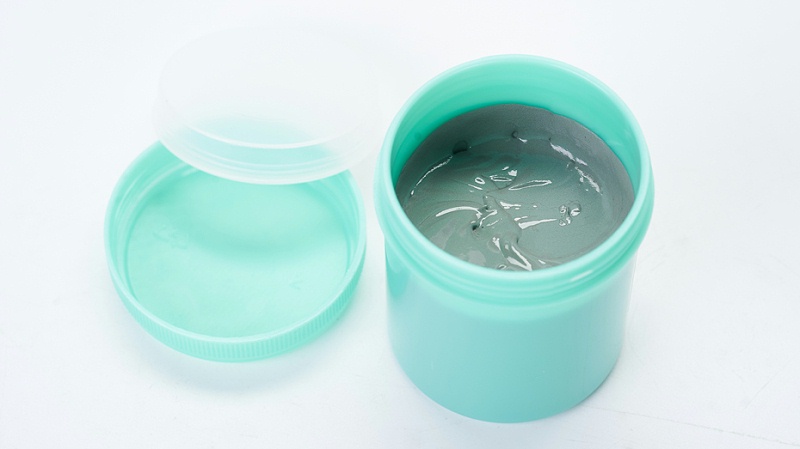
1. What effects does the storage environment of solder paste have on its viscosity and activator if the temperature is too high or too low?
Answer: An increase in the internal temperature of the solder paste is a bad signal, indicating that the internal reaction is very intense. The viscosity will immediately rise and gradually form lumps. Solder paste should be stored in a refrigerator, generally at 2~10℃. The shelf life of solder paste is about six months (unopened). Do not place it in direct sunlight.
2. What effects occur if the Solder Paste Storage temperature is too low?
Answer: Storing at too low a temperature will affect the Flux in the solder paste. There is adhesive in the flux; when the temperature is lower than 2℃, crystallization will occur, which destroys the molecular structure. Warm up before use, and the performance of the solder paste will inevitably be lost to some extent.
3. How can we ensure a good storage environment for solder paste?
Answer: In fact, solder paste is placed in the refrigerator to extend its shelf life. As we all know, solder paste contains active substances, and the ability of these active substances to release activity is related to temperature. The higher the temperature, the stronger the ability to release activity, and the more likely the solder paste is to deteriorate. So when not in use, it is better to store it in the refrigerator, which can ensure the quality of the solder paste.
4. How to solve the problem of cold/false soldering when using solder paste?
Answer: The problems of cold soldering and false soldering ultimately stem from employees' sense of responsibility and operational skills. It is necessary to truly cultivate product quality awareness among employees, enhance their sense of responsibility, and improve their operational skills. Production should be improved from all aspects such as components, tools, and related systems to minimize and prevent substandard issues such as cold and false soldering to the greatest extent possible.
5. What should I do if there is graphic misalignment when using solder paste?
Answer: Edge collapse occurs during solder paste printing. This is closely related to the characteristics of the solder paste, the stencil, and the setting of printing parameters: if the viscosity of the solder paste is relatively low, its shape retention is poor, and it is prone to edge collapse and bridging after printing. If the stencil aperture wall is rough and uneven, the printed solder paste is also prone to edge collapse and bridging. Excessive squeegee pressure exerts a relatively large impact on the solder paste, damaging its shape and significantly increasing the probability of edge collapse. Countermeasures: select solder paste with higher viscosity, use laser-cut stencils, and reduce squeegee pressure.
6. What should be done if there is too much solder paste when using it?
Answer: The main reason for the excessive amount is that stencil adjustment is not in place, resulting in an overly large aperture. If the distance between the stencil and the printed circuit board is too large, bridging will occur. Before use, if the window is too large, it should be tested and adjusted. Set the parameters for the distance from the printed circuit board to the stencil; clean the stencil.
The above is what I have told you about Solder paste — some problems that may occur during use and their solutions, which everyone can learn from. During operation, if an accident occurs, attention or adjustments can also be made. If there are still any unclear points, everyone is welcome to consult Shenzhen JJY Industrial Technology Co., LTD. Let's learn and grow together!
Related Articles
- How to select solder paste for fine pitch QFN assembly without bridging
- What should be noted when soldering with lead-free solder wire?
- Troubleshooting inconsistent solder paste release from nano coated stencils
- How to select and handle solder paste for fine pitch SMT assembly
- Best practices for stencil printing with lead free solder paste
- Adjusting aperture design to improve solder paste release for 01005 components
- What Are the Solder Paste Manufacturers in Changzhou?
- Solder bridging between adjacent pins causing short circuits, key prevention for fine-pitch ICs


