
Focused on SMT soldering processes, a one-stop electronic soldering solutions provider.

Here you can find knowledge about Halogen-Free Solder Paste, including but not limited to usage methods, installation techniques, troubleshooting and more. Focused on SMT soldering processes. If you can't find what you need, please contact us anytime.
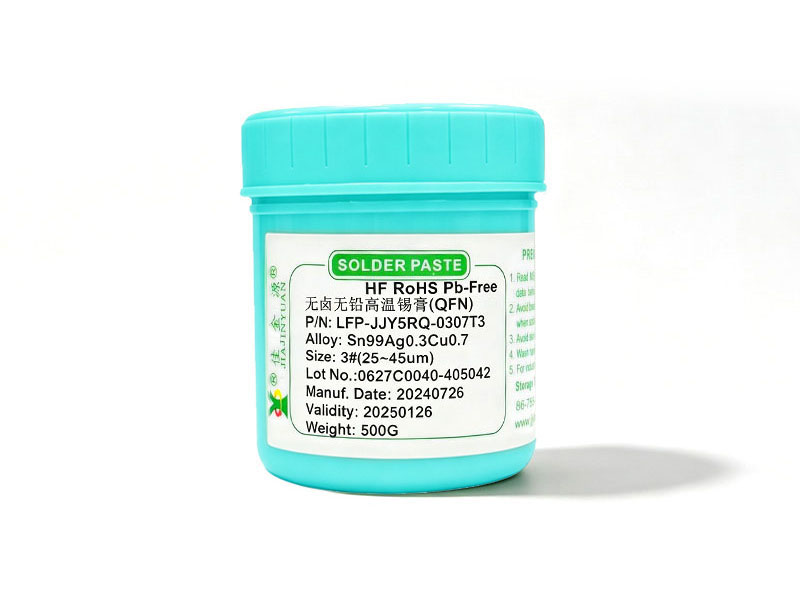
Domestic halogen-free solder paste LFP?5RQ?0307 achieves nearly 100% solder wetting in QFN packages, with its high activity and alloy powder characteristics being the key factors. Optimizing printing parameters and reflow profile can further improve soldering quality.
Published: 2026-08-28
How to select solder paste for SMT must be based on actual production line failures to reverse-engineer process adaptability. Lead-containing solder paste is easy to solder but restricted by RoHS; lead-free solder paste has a high reflow temperature, which easily causes BGA cold solder joints and PCB blistering; halogen-free solder paste, while solving halogen corrosion, sacrifices part of its wettability. The core of solder paste selection lies in matching equipment capabilities, component temperature resistance windows, and long-term reliability requirements. Especially for halogen-free solder paste applications in high-temperature and high-humidity environments, stencil aperture and reflow profile need to be adjusted simultaneously.
Published: 2026-08-27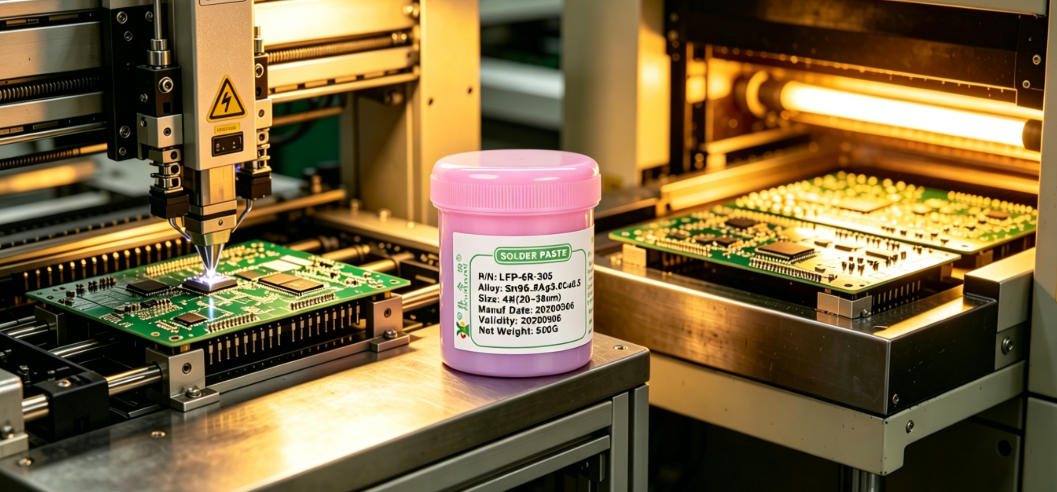
Reflow profile adjustment during SMT soldering with halogen-free solder paste is a core factor affecting solder joint reliability and defect rates. Based on 20 years of practical production line experience, this paper directly addresses common high-frequency issues such as solder balls, tombstoning, and poor wetting. Focusing on four key variables—heating rate, soaking time, peak temperature, and cooling rate—it provides immediately actionable parameter fine-tuning solutions and error-prevention guidelines.
Published: 2026-08-27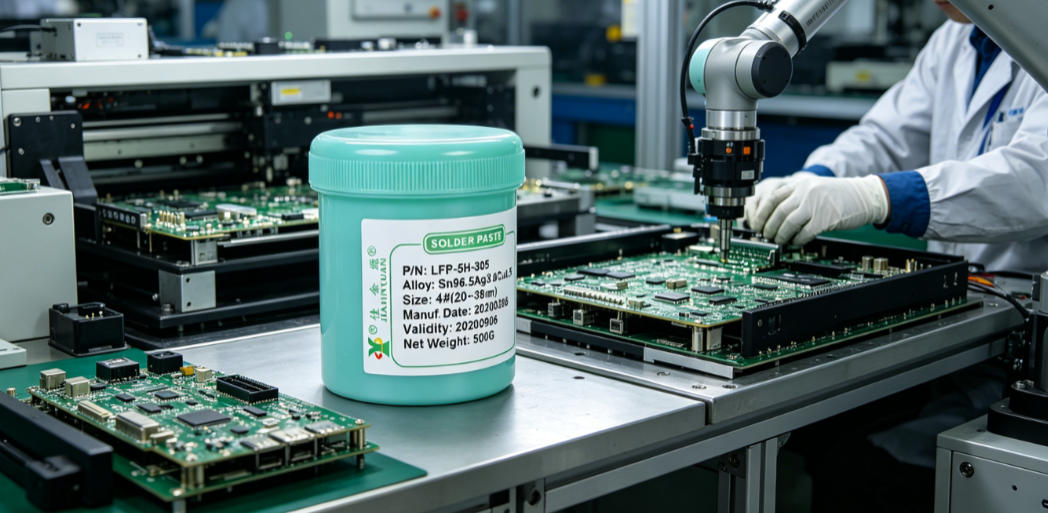
Excessive post-solder residues from halogen-free solder paste is a common pain point in SMT production lines, as it is difficult to clean and prone to causing excessive ionic contamination or false ICT test results. Selecting a matching water-based cleaning agent and optimizing cleaning process parameters can control surface ionic residue within 0.28μg/cm2 NaCl equivalent, significantly improving the yield and long-term reliability of high-density PCBA.
Published: 2026-08-27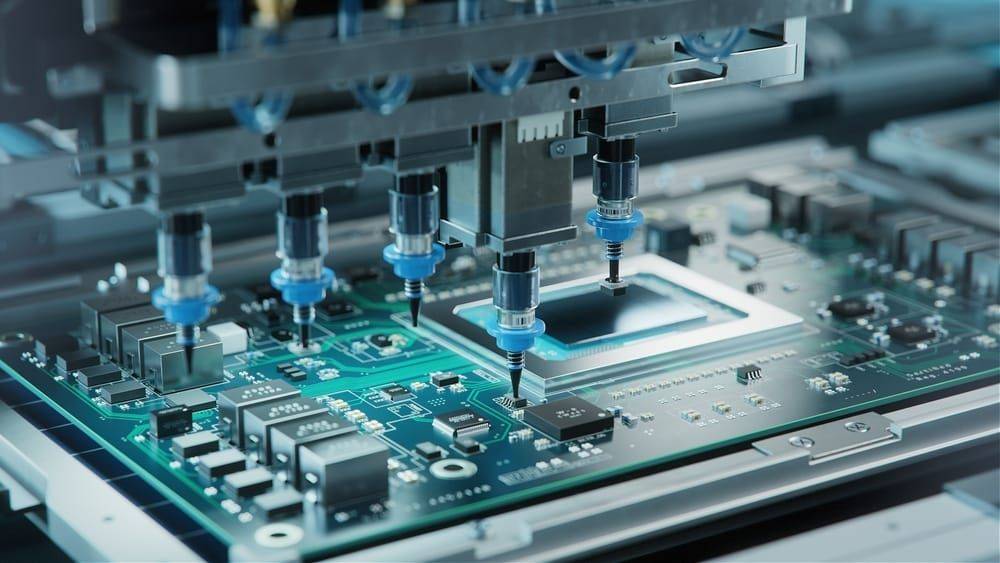
The application penetration rate of halogen-free solder paste in electronic manufacturing continues to increase, making it the preferred soldering material for high-reliability electronic products.
Published: 2026-08-24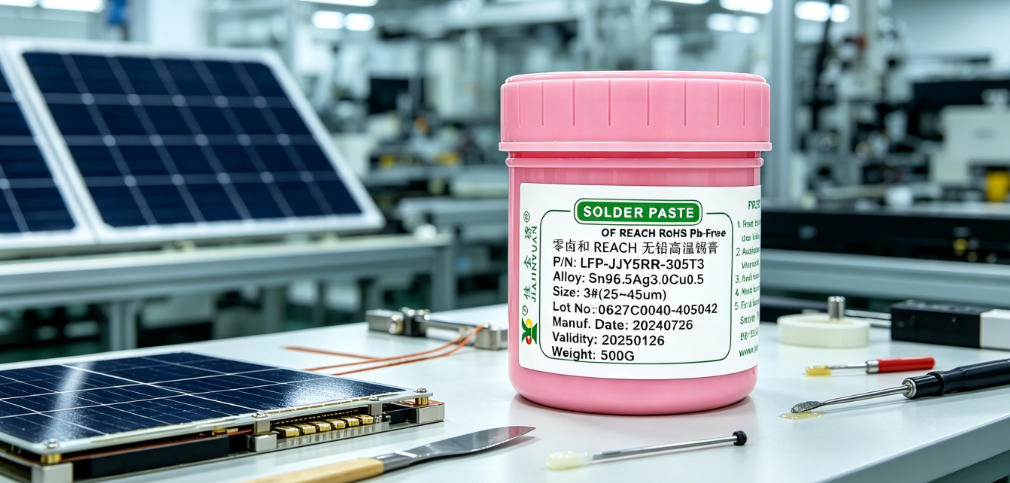
The LFP-5RR series zero-halogen lead-free high-temperature solder paste has obtained REACH environmental certification. With extremely low halogen content, it is suitable for export-oriented electronic product manufacturing.
Published: 2026-08-24
All the partners knowSolder pasteIt is by tin manufacturers orSolder paste manufacturerThe products
Published: 2026-05-12
Jiajinyuan LFP series halogen-free solder paste has completed QFN packaging process verification, with the measured solder wetting rate close to 100%, significantly improving solder joint wettability and bridging control capability. Relying on 0307/T4 alloy powder and ROL1 grade low-halogen formula, it maintains high activity while meeting IPC-J-STD-00
Published: 2023-10-25Soldering on ENIG boards imposes extremely stringent requirements on the halogen residue, wettability, and residue insulation of solder paste. Halogen-free solder paste stands out in preventing excessive dissolution of the gold layer, reducing leakage current during ICT testing, and improving long-term reliability. Jiajinyuan's halogen-free solder paste has been validated on multiple high-end HDI board production lines, demonstrating stable printability under 0.3mm pitch QFN and 0.4mm BGA packages, along with an actual void rate of <8%.
Published: 2023-07-11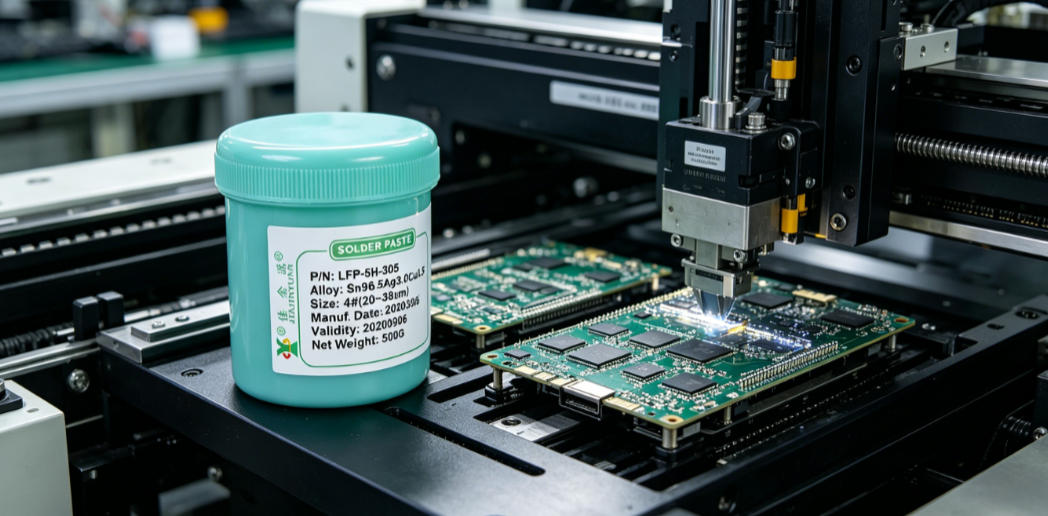
Halogen-free solder paste is an eco-friendly solder paste that complies with RoHS and IEC 61249-2-21 standards. Its core feature is that the flux contains no halogen elements (such as chlorine and bromine) at all, while ordinary solder paste often contains halogen activators to improve wettability. There are essential differences between the two in terms of soldering reliability, ionic contamination, PCB corrosion risk, and ICT test yield.
Published: 2020-01-15Our technical team is always ready to provide professional solder material selection advice and SMT process solutions.