SMT Solder Paste Manufacturers.

Focused on SMT soldering processes, a one-stop electronic soldering solutions provider.

Here you can find knowledge about Solder Wire Manufacturer, including but not limited to usage methods, installation techniques, troubleshooting and more. Focused on SMT soldering processes. If you can't find what you need, please contact us anytime.
Addressing the practical selection pain points of SMT production lines, this section breaks down the solder paste selection logic from three dimensions: printability, reflow performance, and cleaning compatibility. It clarifies that water-washable solder paste must match the spray pressure and solvent concentration of the cleaning machine, while no-clean solder paste must pass the ionic contamination test and its residues must not corrode gold fingers. The performance differences of different solder pastes under stencil aperture, squeegee angle, and ambient temperature and humidity directly determine the first-pass yield.
Published: 2017-10-15In the tin dipping process, the tin dipping time is a key parameter determining the thickness of the terminal tin layer. Excessively long dipping time will lead to an overly thick tin layer, which is prone to oxidation, poor soldering, and abnormal insertion/extraction force. Actual measurements on Jia Jinyuan's production line show that for every 0.5-second increase in tin dipping time, the average tin thickness increases by 8–12 μm. Comprehensive control must be implemented in combination with the base material, tin bath temperature, and flux activity.
Published: 2017-10-14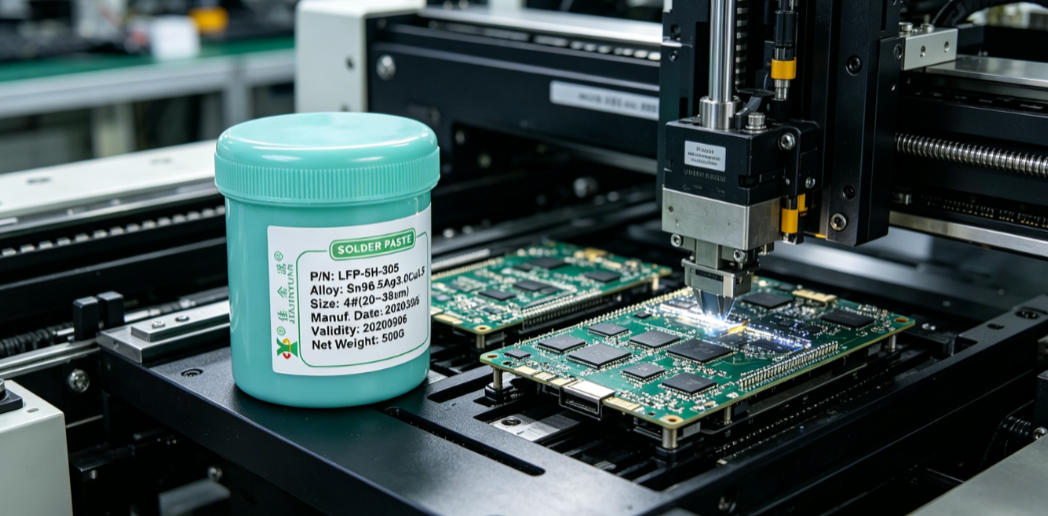
Although flux paste and solder paste both contain flux components, they are fundamentally different. Flux paste contains no metal powder and is specifically used for local touch-up soldering or BGA rework, while solder paste is made by mixing tin powder with flux paste and is suitable for SMT fully automatic printing and placement. The two have non-interchangeable process differences in viscosity, metal content, reflow characteristics and equipment compatibility.
Published: 2017-10-04The scientific combination of soldering auxiliary materials with solder paste and solder wire can significantly improve the first-pass yield of soldering. Especially in difficult processes such as 0201 component placement, QFN bottom pad filling, and OSP board surface wetting, Jiayuanjin solder paste paired with soldering auxiliary materials of corresponding activity levels can reduce the probability of cold soldering, solder bridging, and tombstoning, while reducing cleaning residue and ion contamination risks.
Published: 2017-09-21In the entire chip soldering process, the precision of solder paste printing via SMT stencil directly determines the yield of subsequent component placement and reflow soldering. The viscosity, particle size, and metal content of the solder paste, as well as printing parameters such as squeegee pressure, speed, and release distance, must be coordinated and matched with the actual conditions of the production line. Any mismatch will cause typical defects such as insufficient solder, solder bridging, and misalignment.
Published: 2017-09-07
Yellowing and deterioration of solder paste is a common yet easily misjudged issue on SMT production lines, and its essence is mostly related to rosin oxidation, solvent volatilization, or metal ion-catalyzed reactions. Improper storage of solder paste will accelerate this process. Yellowing does not necessarily mean complete failure, but whether to continue using it requires comprehensive judgment by combining measured indicators such as viscosity changes, solder ball residue, and wetting force attenuation.
Published: 2017-08-22Before purchasing SGS solder, it is necessary to verify the lead content, halogen residue and RoHS compliance data in the SGS solder report; otherwise, the entire batch of export orders may be detained by customs due to failing random inspections under the EU REACH or US CPSIA regulations. Jia Jinyuan solder has passed the full SGS solder test and provides traceable batch reports.
Published: 2017-08-18During the soldering process of OSP boards, pad oxidation is the main cause of cold solder joints and poor wetting. Reasonably setting the reflow profile can effectively suppress copper surface oxidation, with the key being to control the heating rate, shorten the high-temperature exposure time, and ensure the peak temperature accurately falls within the 195℃~210℃ range. Production line verification by Jiajinyuan shows that when the TAL time exceeds 60 seconds or the peak temperature exceeds 212℃, the decomposition of the OSP film accelerates, and the risk of pad oxidation increases sharply.
Published: 2017-08-04Solder ball issues are mostly caused by excessive solder paste volume, unreasonable stencil aperture design, or excessively fast ramp-up rate during reflow soldering, and these three factors often interact in actual production lines. For Jiajinyuan solder paste, when the stencil thickness is 0.12mm, if the aperture area ratio exceeds 0.65 and the ramp-up slope before the peak temperature exceeds 3℃/s, isolated solder balls with a diameter of 40–80μm are extremely likely to form at the edges of CHIP component pads.
Published: 2017-07-31Solder manufacturers provide free sample mailing services to help SMT engineers verify the soldering yield of solder paste, solder wire, or lead-free solder bars in the actual production line environment, avoiding typical defects such as cold solder joints, poor wetting, and solder ball splashing after batch introduction. Jia Jinyuan, a solder manufacturer with 20 years of focus on SMT process supporting, provides samples of all series specifications to match mainstream stencil apertures and reflow soldering profiles.
Published: 2017-07-17Our technical team is always ready to provide professional solder material selection advice and SMT process solutions.