SMT Solder Paste Manufacturers.

Focused on SMT soldering processes, a one-stop electronic soldering solutions provider.

Here you can find knowledge about Solder Paste Viscosity, including but not limited to usage methods, installation techniques, troubleshooting and more. Focused on SMT soldering processes. If you can't find what you need, please contact us anytime.
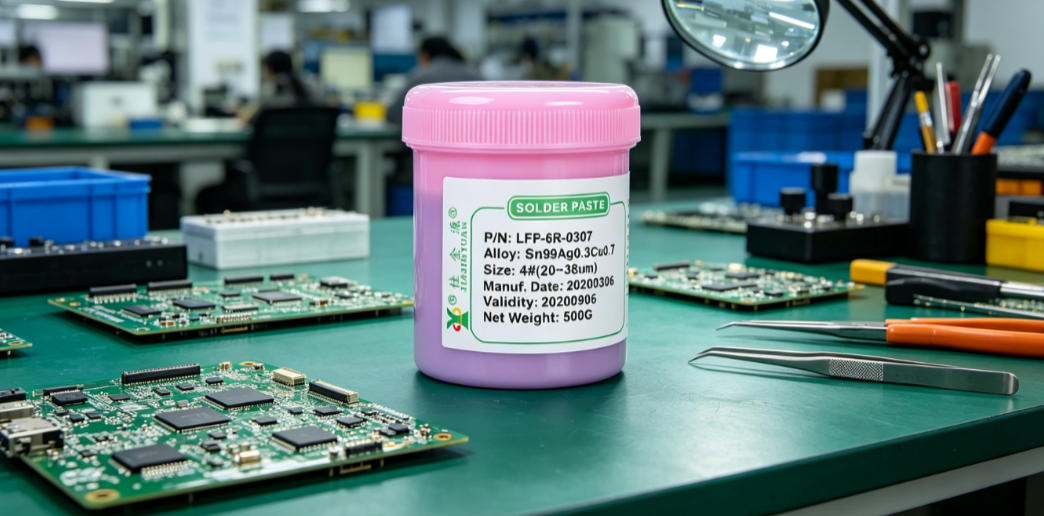
The viscosity and thixotropic index of solder paste directly affect SMT printing accuracy and solder joint yield. IPC-J-STD-005 specifies that the viscosity range of solder paste is 200–800 Pa·s (25℃), and the thixotropic index should be ≥0.75. When the measured value is below 0.65, it is easy to cause solder spikes, bridging and insufficient solder; when it is above 0.95, it will lead to poor demolding and edge collapse. The production line needs to conduct actual measurement and temperature calibration every 4 hours using a Brookfield LVDV-II+ with matching cone-and-plate rotors to avoid data drift caused by an ambient temperature difference exceeding ±2℃.
Published: 2026-08-27
The SAC305 and Sn99.3Cu0.7 solder paste alloys exhibit significant differences in actual SMT production lines. SAC305 has better wettability and thermal fatigue resistance, while Sn99.3Cu0.7 offers lower cost and a narrower melting range window due to its silver-free composition. For both alloys, dynamic trade-offs must be made in terms of printability, reflow void rate, solder joint strength, and long-term reliability, taking into account specific component types, board thickness, and reflow oven temperature zone configuration.
Published: 2026-08-27
Solder selection directly affects SMT first-pass yield and rework costs; solder paste, solder wire, and solder bars must be dynamically matched according to process takt, solder joint precision, and rework frequency. For example, batch mounting of 0201 components requires 3# powder solder paste paired with stainless steel stencils, while bottom rework for BGA preferentially uses 0.3mm diameter no-clean solder wire, saving over 240 hours of rework labor per production line annually.
Published: 2026-08-27
How to select solder paste for SMT must be based on actual production line failures to reverse-engineer process adaptability. Lead-containing solder paste is easy to solder but restricted by RoHS; lead-free solder paste has a high reflow temperature, which easily causes BGA cold solder joints and PCB blistering; halogen-free solder paste, while solving halogen corrosion, sacrifices part of its wettability. The core of solder paste selection lies in matching equipment capabilities, component temperature resistance windows, and long-term reliability requirements. Especially for halogen-free solder paste applications in high-temperature and high-humidity environments, stencil aperture and reflow profile need to be adjusted simultaneously.
Published: 2026-08-27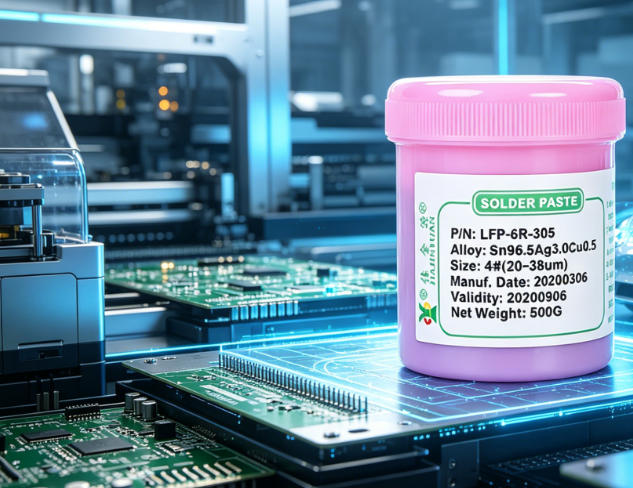
Poor solder paste wettability during SMT soldering on thick gold PCBs commonly manifests as solder joint voids, insufficient solder climb, or local dewetting. The root cause is excessive gold layer thickness leading to nickel layer passivation and excessive consumption of flux activity. Evaluation requires comprehensive judgment by combining wetting angle measurement, microscopic observation of solder joint morphology, and IMC growth state after reflow. The matching between thick gold PCBs and solder paste wettability is a key process control point to ensure first-pass yield.
Published: 2026-08-27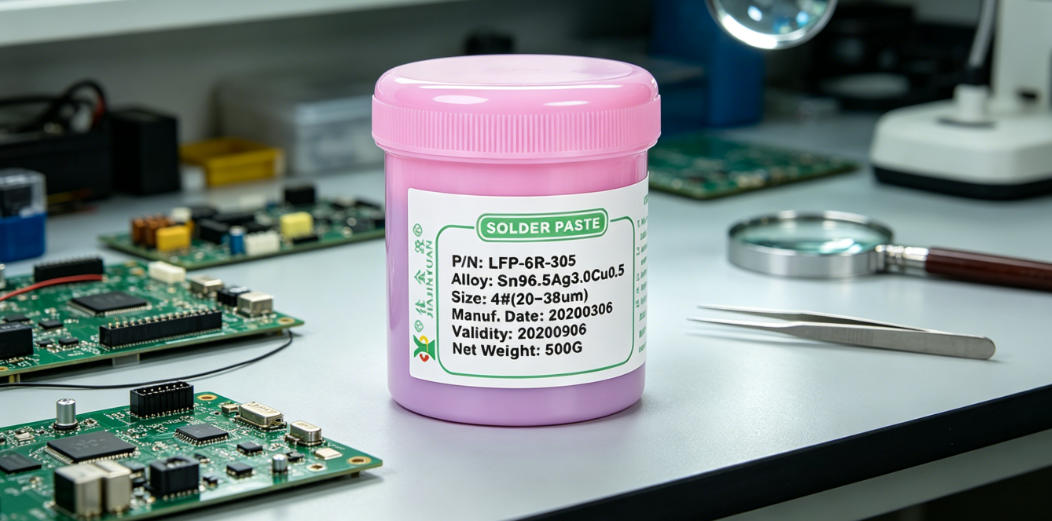
Restarting the machine after an SMT shutdown involves multiple risks such as reduced solder paste printing accuracy, stencil clogging, and solder paste activity attenuation. Differentiated response strategies must be developed based on the shutdown duration, ambient temperature and humidity, and solder paste type, with particular attention paid to squeegee pressure calibration, stencil cleaning frequency, and solder paste rewarming and stirring operations in the solder paste printing process.
Published: 2026-08-27
The control of the solder wire feeding angle directly affects the spatter rate of manual soldering. The industry is currently accelerating its evolution toward micro-solder joints below 0.3mm, high-density mixed-assembly PCBs, and lead-free high-temperature processes. However, the traditional fixed 45° solder feeding method can no longer match the production line reality where 0.25mm pitch QFNs and 0402 components coexist. Frontline engineers must dynamically compress the angle between the solder wire and the soldering iron tip to the 25°~35° range, while synchronously adjusting the solder feeding rhythm and the soldering iron withdrawal timing.
Published: 2026-08-27
To address the frequent solder bridging and solder spike defects of large-size QFP devices in the SMT process, this paper starts from solder paste selection, and combines printing accuracy, reflow thermal response and metal powder distribution characteristics to elaborate on special solder pastes with high thixotropy, narrow particle size distribution (D50=18.5μm) and 90.2% metal content, such as
Published: 2026-08-27
Aiming at typical defects such as solder joint blackening, cold solder joints, and stencil clogging caused by solder paste and solder bar switching during the lead-free to leaded transition in the SMT line changeover process, this paper, based on real production line cases, details rapid response actions including emergency line shutdown and cleaning, flux residue removal, and equipment pipeline passivation treatment, and proposes root-cause elimination measures such as solder paste zoning management, solder bar batch binding, and dynamic monitoring of reflow oven nitrogen purity, providing an immediately executable closed-loop solder paste and solder bar switching process for SMT line changeover.
Published: 2026-08-27
Welding of FPC flexible boards is highly sensitive to solder paste printing accuracy and mounting pressure. Based on a review of real production line failures, this paper horizontally compares the occurrence rates of bridging, tombstoning, and cold soldering under different solder paste viscosities, metal contents, thixotropic properties, and various mounting pressure ranges (0.15N~0.6N) in typical scenarios such as fine-pitch ICs, double-sided pads, and high-density blind/buried via FPCs. It is clarified that for solder paste printing, models with 4# powder, 88.5% metal content, viscosity of 220Pa·s, and thixotropic index >4.2 should be prioritized, while mounting pressure must be dynamically set according to pad size, and must not be uniformly set to 0.3N.
Published: 2026-08-27Our technical team is always ready to provide professional solder material selection advice and SMT process solutions.