SMT Solder Paste Manufacturers.

Focused on SMT soldering processes, a one-stop electronic soldering solutions provider.

Here you can find knowledge about Solder Paste Manufacturer, including but not limited to usage methods, installation techniques, troubleshooting and more. Focused on SMT soldering processes. If you can't find what you need, please contact us anytime.
A domestic solder source factory directly supplies a full range of soldering materials including solder paste, solder wire and solder bar. Jia Jinyuan's production line measured solder paste release rate exceeds 98.5%, and the wetting angle after reflow is ≤35°. It supports providing SGS test reports and ROHS2.0 compliance certificates by batch, meeting the strict control requirements for metal composition segregation and halogen residues in automotive electronics and medical equipment.
Published: 2018-07-01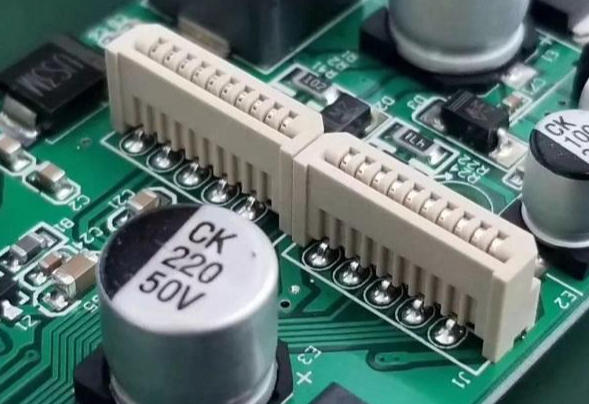
What solder paste to use for BGA repair and how to select the appropriate activity level directly affects the first-pass rework success rate and solder joint reliability. Production line verification by JJY shows that medium-activity RMA solder paste balances wettability and controllable residue in most BGA soldering scenarios; high-activity RA solder paste is only suitable for special chips with severe oxidation or poor plating, while no-clean solder paste must be paired with nitrogen-protected reflow conditions.
Published: 2018-06-29The process window setting for lead-free solder paste reflow soldering must balance the coordinated control of peak temperature and soaking zone. Jia Jinyuan lead-free solder paste performs stably in the peak temperature range of 235°C to 245°C. However, if the soaking zone temperature is below 150°C and the duration is less than 60 seconds, it can easily lead to poor wetting and increased void rate. In actual production lines, the conveyor speed and the power of each temperature zone need to be dynamically adjusted based on the measured curves from a temperature profiler.
Published: 2018-06-18The one-stop provision of PCBA soldering materials must closely align with the actual needs of the production line. As a core material, solder paste must match stencil apertures, reflow profiles, and component spacing. Jia Jinyuan solder paste shows no obvious slump during 24 consecutive hours of printing on 0.3mm pitch QFN. When paired with flux of the corresponding activity level, low-oxygen solder wire, and high-purity solder bar, it ensures consistent yield in SMT placement and manual soldering rework.
Published: 2018-05-23Cold solder joint is one of the most frequent soldering defects on SMT production lines. Pad oxidation and insufficient flux activity are the two main causes: the former prevents solder paste from wetting the copper surface, while the latter makes the oxide film difficult to remove. When the two factors overlap, the incidence of cold solder joint can increase by more than 3 times. The Jiajinyuan JHY-805 series flux has a measured wetting angle of <25° on OSP boards, effectively suppressing the formation of cold solder joints.
Published: 2018-05-09Solder for 5G equipment must maintain zero solder joint cracking under complex operating conditions such as high-frequency vibration, wide temperature cycling, and high humidity and salt spray. Jiajinyuan's halogen-free high-reliability solder, through optimizing the SnAgCu main alloy ratio and the compounding of nano-scale active flux, achieves a solder joint shear force attenuation of <8% after 500 cycles of thermal shock from -40°C to +125°C, with a halogen content of <900ppm, fully meeting the long-term reliability requirements for 5G equipment solder in high-density interconnect scenarios such as 5G base station RF modules and millimeter-wave antenna arrays.
Published: 2018-04-27The sphericity, particle size distribution, and oxidation level of tin powder particles in SAC solder paste directly affect the release integrity and pad coverage during solder paste printing. Actual production lines have found that spherical tin powder with a D50 of 25μm can achieve a release rate of over 92% on a 38μm aperture stencil. When the D50 deviation exceeds ±1.5μm or the oxygen content is >0.5wt%, the defect rates of solder bridging and insufficient solder increase by more than 3 times. The process compatibility of solder paste, SAC solder paste, and tin powder solder paste must be based on measured particle parameters.
Published: 2018-04-13During PCB pad processing, the soldering performance of ENIG, Immersion Silver and OSP processes differs significantly. The ENIG layer is oxidation-resistant but has poor wettability, requiring high-activity solder paste. Immersion Silver is prone to sulfidation discoloration and sensitive to reflow peak temperature. Uneven OSP film thickness can cause local non-wetting. The three processes must be managed differentially in stencil aperture design, reflow profile setting, and incoming material storage conditions.
Published: 2018-04-13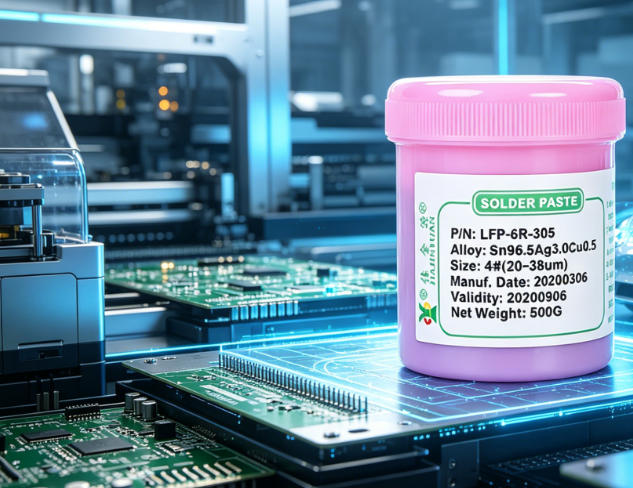
Opening the solder paste container directly without sufficient warm-up will cause abnormal increase in solder paste viscosity, uneven flux precipitation, poor printing release, and increased void rate of solder joints. In severe cases, it will lead to batch defects such as solder bridging, insufficient solder, and cold solder joints. The warm-up of solder paste must strictly follow the requirement of standing at room temperature for 2 to 4 hours. Before opening the solder paste, it is necessary to confirm that the warm-up is sufficient and there is no condensed water on the surface.
Published: 2018-03-26During the pin dip soldering process, oxidation of the solder bath surface is the main cause of continuous dross generation. Jiajinyuan anti-oxidation flux, through the synergistic effect of dynamic coverage and active ingredients, forms a dense inert film on the solder bath surface, reducing the oxidation rate by more than 70% during pin dip soldering, cutting daily dross production by 1.2kg, significantly extending the cleaning cycle of the solder pot, and stabilizing solder joint wettability.
Published: 2018-03-24Our technical team is always ready to provide professional solder material selection advice and SMT process solutions.