
Focused on SMT soldering processes, a one-stop electronic soldering solutions provider.

Here you can find knowledge about Alloy Solder, including but not limited to usage methods, installation techniques, troubleshooting and more. Focused on SMT soldering processes. If you can't find what you need, please contact us anytime.

Whether solder bars can be mixed depends on the compatibility of alloy compositions and the matching degree with the process window of the wave soldering machine. Mixing different alloy solders can easily lead to risks such as melting point shift, uneven wetting, and embrittlement of solder joints. In actual production lines, common phenomena include increased solder dross, solder joint spikes, or cold solder joints. It is recommended to give priority to using solder bars from the same manufacturer and the same batch to ensure the stability of the alloy solder composition and the consistency of soldering.
Published: 2024-06-27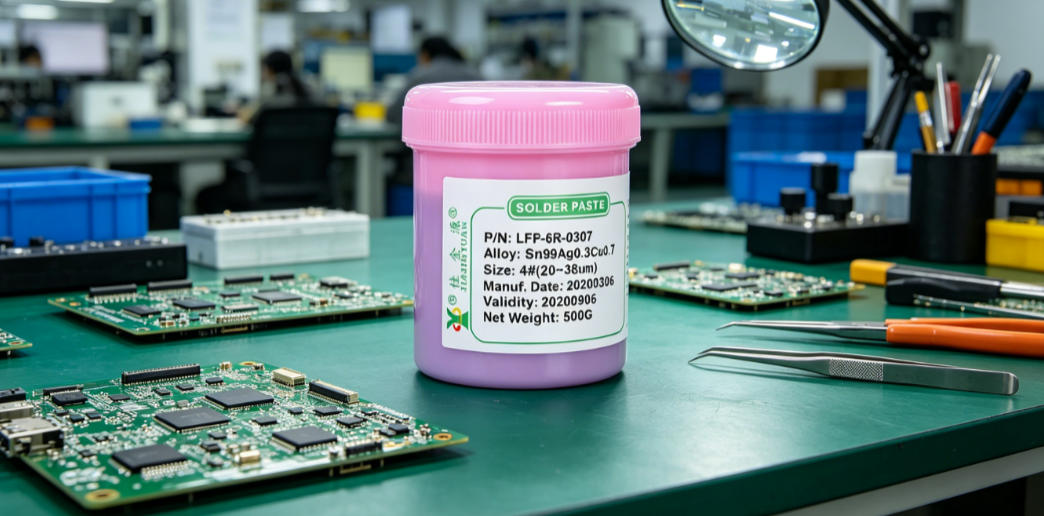
The solder paste reflow profile must be dynamically adjusted according to the alloy composition, melting point range, and flux activity. For example, SAC305 requires a peak temperature of 235℃±5℃ and a time above liquidus of 60~90 seconds, while Sn63/Pb37 requires a peak temperature of 220℃±3℃ and a time above liquidus of 45~60 seconds. The metal powder particle size distribution and oxidation level of different solder pastes also significantly affect the ramp-up rate and soak zone settings.
Published: 2021-01-27The sphericity, particle size distribution, and oxidation level of tin powder particles in SAC solder paste directly affect the release integrity and pad coverage during solder paste printing. Actual production lines have found that spherical tin powder with a D50 of 25μm can achieve a release rate of over 92% on a 38μm aperture stencil. When the D50 deviation exceeds ±1.5μm or the oxygen content is >0.5wt%, the defect rates of solder bridging and insufficient solder increase by more than 3 times. The process compatibility of solder paste, SAC solder paste, and tin powder solder paste must be based on measured particle parameters.
Published: 2018-04-13Fluctuations in the alloy composition of solder paste directly undermine its soldering stability, causing batch defects such as cold solder joints, bridging, and poor wetting. Especially in high-density placement scenarios like 0201 components and 0.4mm pitch QFN packages, even a ±0.05wt% deviation in the tin-silver-copper ratio of the alloy solder paste can lead to a drop of over 12% in post-reflow solder joint thrust. Therefore, continuous monitoring of solder paste quality is a critical line of defense to ensure the SMT first-pass yield.
Published: 2015-05-21Our technical team is always ready to provide professional solder material selection advice and SMT process solutions.