SMT Solder Paste Manufacturers.

Focused on SMT soldering processes, a one-stop electronic soldering solutions provider.

Here you can find knowledge about Soldering Material, including but not limited to usage methods, installation techniques, troubleshooting and more. Focused on SMT soldering processes. If you can't find what you need, please contact us anytime.

The price of solder paste is affected by various factors, such as brand, composition and application, and the prices of solder paste with different specifications vary greatly. Understanding the price of solder paste helps enterprises make reasonable purchases and reduce production costs.
Published: 2026-08-28
For the soldering scenario of copper wire lamps with temperature-sensitive crystal oscillators, the LFP?2RTHL?Sn64Bi35Ag1 medium-temperature solder paste solution demonstrates excellent soldering performance and reliability. Its unique alloy composition and process adaptability effectively solve problems in traditional soldering such as high void rate and poor solder climbing effect, providing for precision electronics
Published: 2026-08-28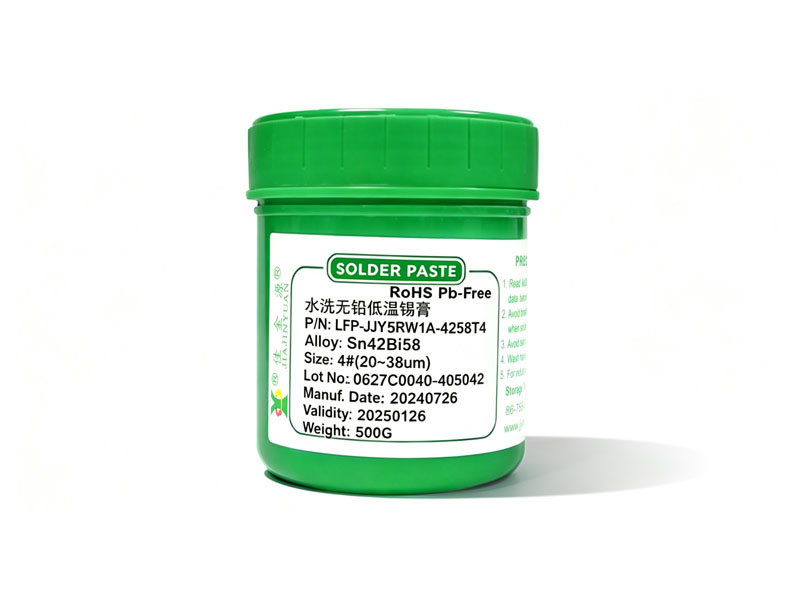
LFP?5RW1A?Sn42Bi58 water-washable low-temperature solder paste is specifically designed for nickel-plated aluminum fins of heat sinks. It leaves no residue after soldering, meets high-precision soldering requirements, and offers excellent water-wash performance and cost advantages. It is suitable for high-demand scenarios such as telecommunications and consumer electronics.
Published: 2026-08-28
The formation causes of wave soldering dross involve the purity of solder bars, oxide film control, and the synergistic imbalance of process parameters. By comparing the dross generation amount of high-purity solder bars and conventional solder bars under different chain speeds, wave heights, and nitrogen protection, combined with the actual line changeover cost and maintenance frequency of the production line, the two-way optimization path of the solder bar process is clarified, providing a feasible selection basis for the mass production of high-reliability PCBs.
Published: 2026-08-27
Sn63Pb37 solder paste still has irreplaceable process stability in through-hole SMT production lines. Its eutectic properties bring low melting point, narrow reflow window and excellent wettability. However, limited by RoHS compliance pressure and lead-free mixed line risks, practical applications must directly address high-frequency failures such as solder joint cracking, cold solder joints, insufficient wetting, and stencil clogging, which are particularly evident in 0201 component soldering and double-sided board rework scenarios.
Published: 2026-08-27
There are significant differences between SMT nitrogen soldering and air soldering in terms of solder paste wettability, void rate, solder joint finish, and flux residue performance in actual production lines. Nitrogen soldering can reduce the void rate of BGA solder joints from 15%~25% in air soldering to 3%~8%, with particularly prominent advantages on OSP copper surfaces, fine-pitch QFNs, and high-reliability military boards, but the cost of nitrogen consumption and equipment compatibility must be weighed.
Published: 2026-08-27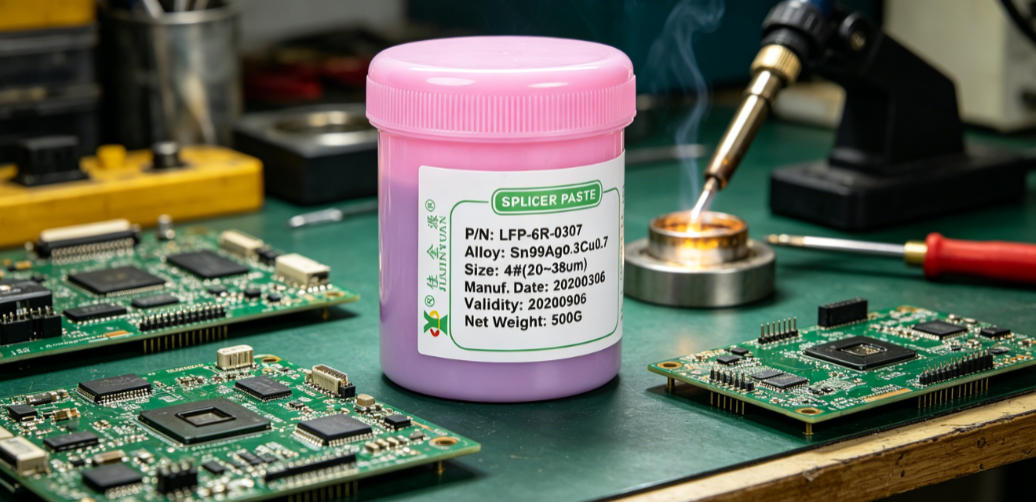
The flux content of solder wire directly affects the wetting performance of solder joints: excessively high flux content easily causes blackened residues and PCB corrosion, while excessively low flux content leads to poor wetting and frequent cold solder joints. Based on real failure cases from SMT production lines, this paper analyzes the wetting failure mechanism caused by abnormal flux content, and provides both emergency remediation measures and long-term root-cause solutions.
Published: 2026-08-27
Antioxidation of solder bars is the core guarantee for the stable operation of wave soldering. Thickening of the oxide film will accelerate the imbalance of the surface tension of the molten solder, directly leading to an abnormal increase in wave soldering dross. By controlling the molten solder temperature, adding antioxidants, optimizing the nitrogen coverage of the solder pot, and adjusting the frequency of regular dross removal, wave soldering dross can be reduced by more than 40%.
Published: 2026-08-27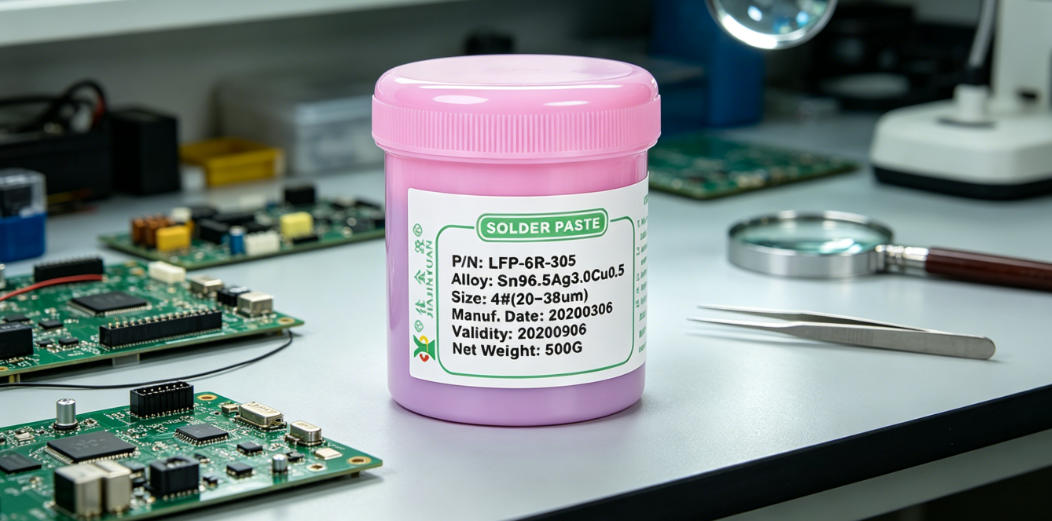
SMT soldering of industrial control boards is highly sensitive to the technical specifications of solder paste. Since industrial control boards generally feature large-area copper foils, multilayer thick boards, high-TG substrates, and fine-pitch components such as BGA/CSP, defects including printing slump, reflow voids, and poor wetting occur frequently. Viscosity, metal content, particle size distribution, flux activity, and residue insulation in the technical specifications of solder paste directly determine the first-pass yield and long-term reliability.
Published: 2026-08-27
The particle size of tin powder directly affects the release performance of solder paste printing, solder joint fullness, and bridging risk. Excessively fine powder is prone to oxidation and screen clogging, while excessively coarse powder leads to printing skipping and cold soldering. In actual production lines, the solder paste printing process needs to be collaboratively optimized by combining stencil aperture dimensions, squeegee parameters, and reflow profiles.
Published: 2026-08-27Our technical team is always ready to provide professional solder material selection advice and SMT process solutions.