SMT Solder Paste Manufacturers.

Focused on SMT soldering processes, a one-stop electronic soldering solutions provider.

Here you can find knowledge about Solder Wire Rolls, including but not limited to usage methods, installation techniques, troubleshooting and more. Focused on SMT soldering processes. If you can't find what you need, please contact us anytime.
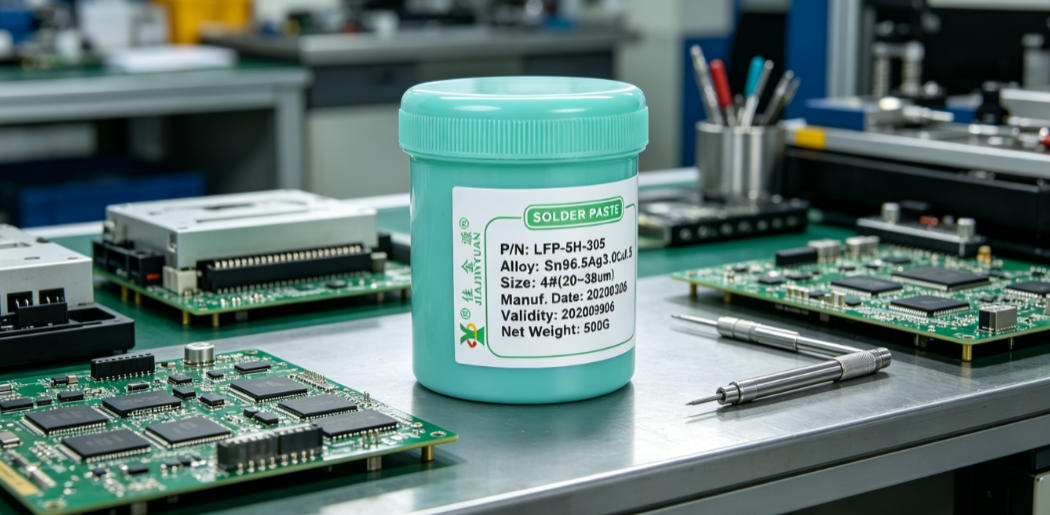
This article compares key lead-free solder paste systems—including SAC305, SAC405, SN100C, and SC27—by analyzing their melting behavior, wetting performance, mechanical reliability, and compatibility with common PCB surface finishes like ENIG, OSP, and immersion silver, while emphasizing practical trade-offs in stencil life, slump resistance, voiding tendency, and rework sensitivity encountered during high-volume SMT production.
Published: 2026-11-08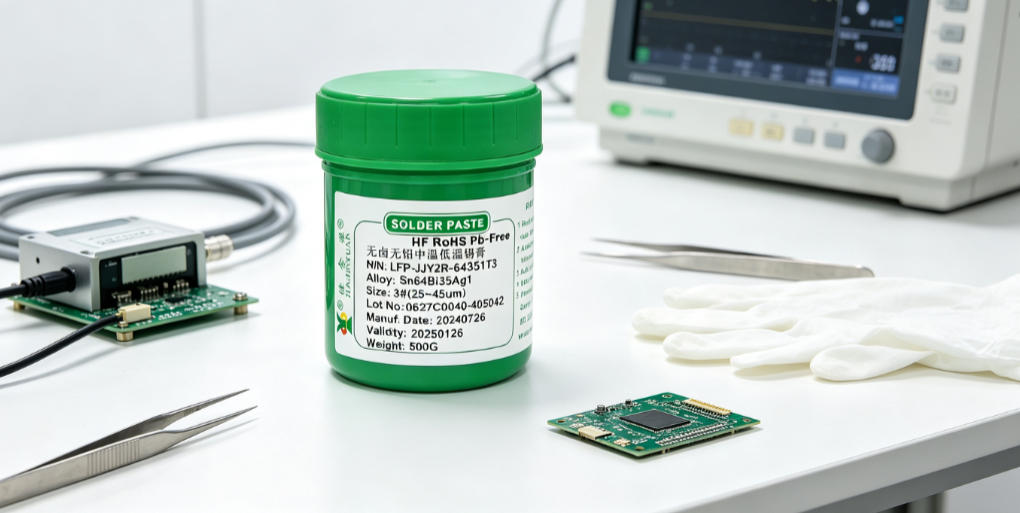
This article examines how material composition, thermal history, and interfacial metallurgy govern the Joint Strength of Solder Bar in reflow-soldered assemblies, emphasizing practical correlations between alloy selection, cooling rate, IMC layer thickness, and measured shear strength values, while clarifying why Sn63Pb37 remains a benchmark for consistent Joint Strength despite lead-free alternatives gaining traction in high-reliability applications.
Published: 2026-11-08
This explanation clarifies the Solder Wire Product Grading system used across manufacturing, procurement, and quality assurance workflows, emphasizing how alloy composition, diameter tolerance, flux content uniformity, surface oxide level, and spool packaging integrity collectively determine grade classification; it highlights that Grade A wire meets strict IPC-J-STD-006B specifications for no-clean rosin-core applications, Grade B allows ±5% diameter deviation and up to 1.2% surface oxide for general-purpose rework, and Grade C is restricted to non-critical hand-soldering where visual inspection replaces automated optical verification, ensuring engineers select appropriate Solder Wire based on process sensitivity, reliability requirements, and cost constraints.
Published: 2026-11-08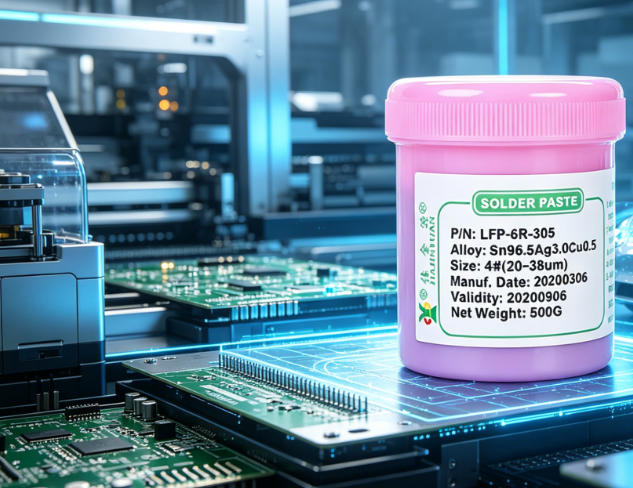
A practical Solder Paste Incoming Inspection checklist designed for SMT engineers and procurement teams, covering visual verification, lot traceability, viscosity testing, metal content analysis, refrigeration history monitoring, and flux residue evaluation, all aligned with IPC-J-STD-005 standards to prevent printing defects, solder balling, and poor wetting caused by compromised solder paste integrity.
Published: 2026-11-08
Repeated melting of Solder Bar degrades microstructural homogeneity, accelerates intermetallic compound growth at grain boundaries, and increases oxide inclusion density, all of which directly impair wetting performance, tensile strength, and long-term joint reliability in SMT assembly; Multi Times Melting introduces cumulative thermal stress that cannot be reversed by standard re-casting protocols, making traceability and controlled reuse essential for high-reliability electronics manufacturing.
Published: 2026-11-07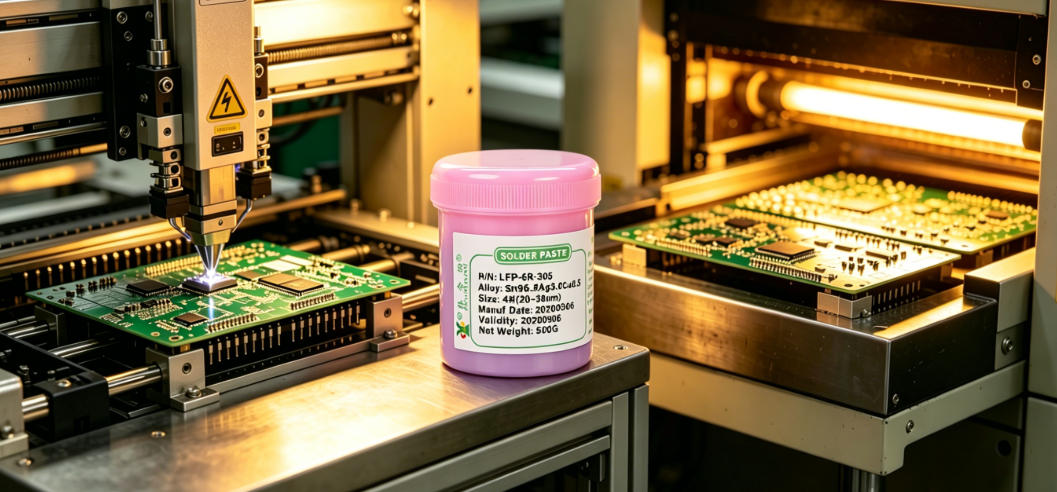
Solder wire formulated with low temperature alloy compositions offers advantages in heat-sensitive applications but exhibits inherent mechanical and metallurgical weaknesses, including reduced tensile strength, poor wetting on high-melting-point substrates, increased susceptibility to brittle fracture under thermal cycling, and compromised intermetallic layer stability; these limitations stem directly from the depressed eutectic temperatures and altered phase distributions characteristic of low temperature alloy systems used in solder wire manufacturing.
Published: 2026-11-07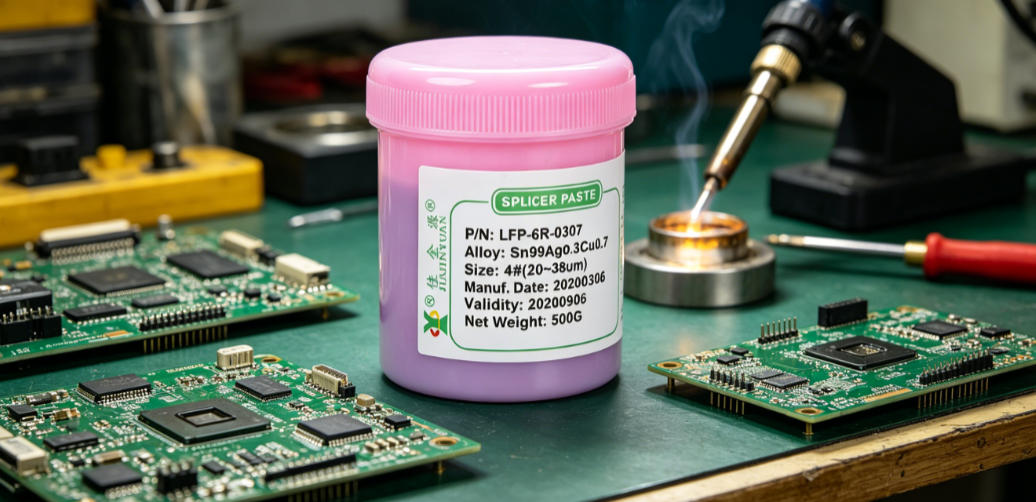
Solder paste performance hinges critically on alloy compatibility verification, which ensures stable rheology, consistent print transfer, and reliable intermetallic formation during reflow; mismatches between solder paste alloy composition and component termination metallization or PCB surface finish can trigger dewetting, poor wetting, or brittle joint failure, especially when mixing lead-free alloys like SAC305 with legacy SnPb terminations or OSP-coated copper pads without thorough validation.
Published: 2026-11-07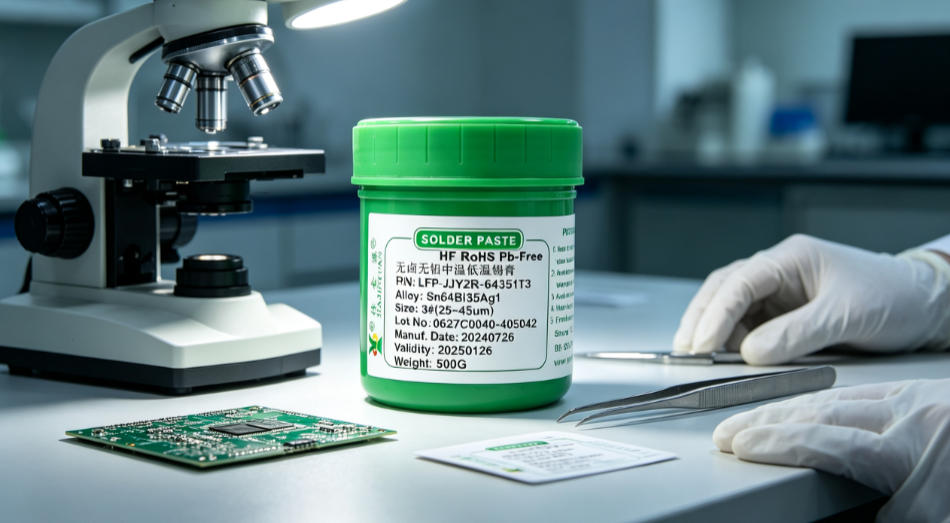
This specification defines precise, actionable protocols for Solder Bar Storage and Management to prevent oxidation, contamination, and alloy segregation while ensuring consistent solderability and process stability across SMT lines, emphasizing environmental control, material traceability, container integrity, and first-in-first-out discipline throughout the supply chain.
Published: 2026-11-07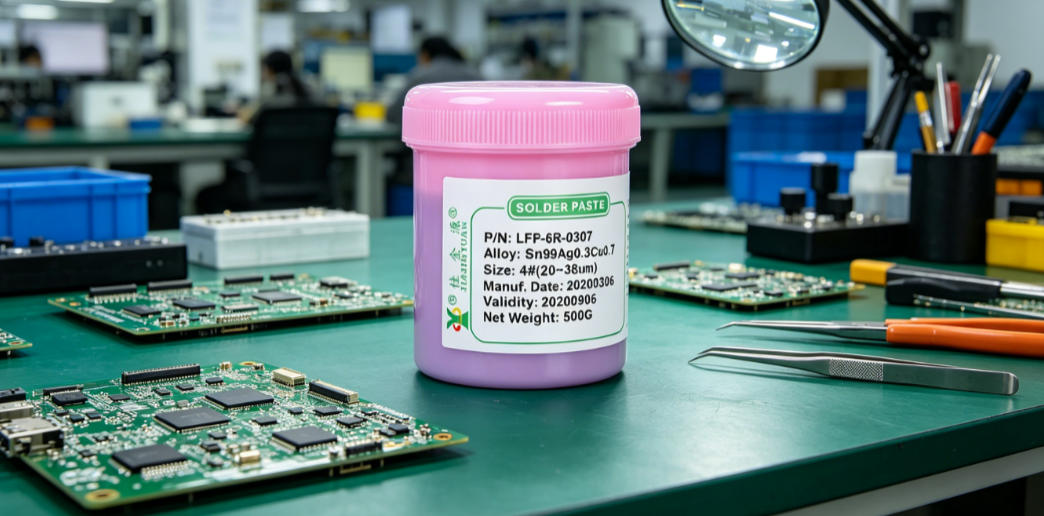
Solder wire exposed to ambient moisture undergoes progressive degradation through oxidation, flux destabilization, and intermetallic compound disruption, leading to poor wetting, void formation, and brittle joints; understanding the moisture damage mechanism of solder wire is essential for storage protocol optimization, real-time humidity monitoring in SMT environments, and reliable joint formation during hand-soldering or wave soldering processes.
Published: 2026-11-06
This uniformity testing scheme for solder paste provides SMT engineers and process technicians with a practical, repeatable method to verify consistency in particle distribution, viscosity, and flux separation across batches; it emphasizes visual inspection under standardized lighting, controlled rheological measurement using a rotational viscometer at 25°C and 10 rpm, and microscopic analysis of printed stencil apertures after deposition on FR-4 test boards, all performed within 30 minutes of paste opening to avoid ambient humidity effects, ensuring reliable assessment of solder paste uniformity without reliance on proprietary software or destructive sampling.
Published: 2026-11-06Our technical team is always ready to provide professional solder material selection advice and SMT process solutions.