SMT Solder Paste Manufacturers.

Focused on SMT soldering processes, a one-stop electronic soldering solutions provider.

Here you can find knowledge about Solder Wire 500g, including but not limited to usage methods, installation techniques, troubleshooting and more. Focused on SMT soldering processes. If you can't find what you need, please contact us anytime.
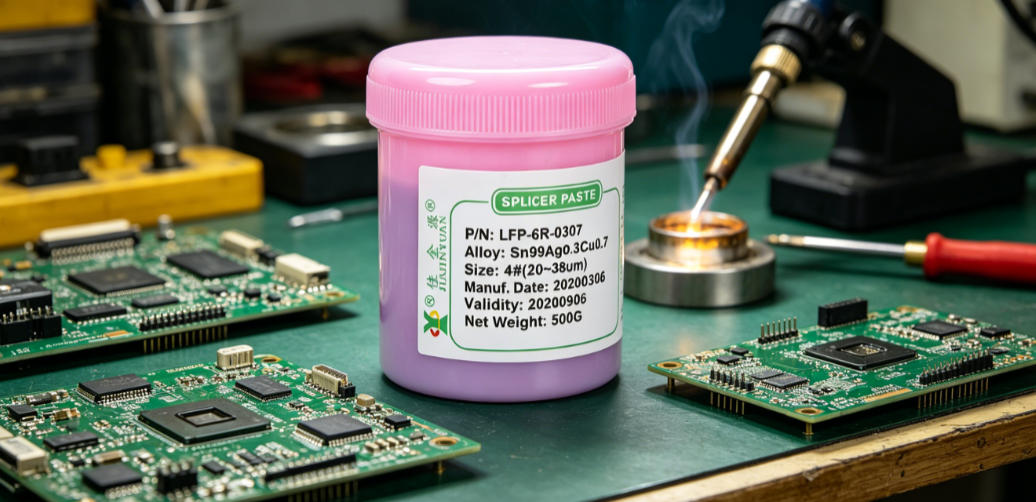
The flux content of solder wire directly affects the wetting performance of solder joints: excessively high flux content easily causes blackened residues and PCB corrosion, while excessively low flux content leads to poor wetting and frequent cold solder joints. Based on real failure cases from SMT production lines, this paper analyzes the wetting failure mechanism caused by abnormal flux content, and provides both emergency remediation measures and long-term root-cause solutions.
Published: 2026-08-27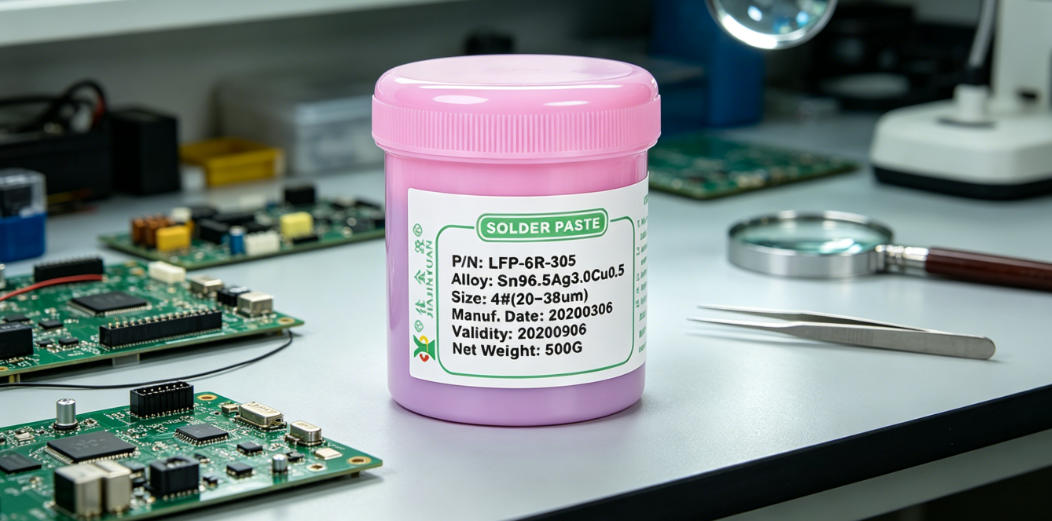
High-temperature solder paste and medium-temperature solder paste have distinctly different thermal stress responses, component compatibility, and rework difficulty in SMT production lines due to their melting point differences. High-temperature solder paste is suitable for high-reliability automotive electronics and high-power modules, while medium-temperature solder paste is mostly used in consumer motherboards containing heat-sensitive components such as BGA and MLCC. Incorrect selection will directly cause batch failures such as solder joint voiding, tombstoning, or PCB delamination.
Published: 2026-08-27
The BGA void issue has long plagued the yield of high-reliability packaging. Starting from the intrinsic properties of solder paste materials, this paper reveals how key parameters such as the volatilization path of flux, the thickness of the oxide film on metal powder, and the melt viscosity of the alloy synergistically induce voids. It focuses on analyzing the measured value of low-residue, high-wetting solder paste with a narrow particle size distribution in reducing the void rate by more than 35%.
Published: 2026-08-27
The selection of no-clean solder paste and water-washable solder paste in SMT production lines directly determines yield, cost, and delivery rhythm. No-clean solder paste, with advantages such as residue ion content <0.5μg/cm2, eliminating the cleaning process to save 2.3 hours of production capacity per shift, and no need for water-based cleaning equipment investment after reflow, is suitable for high-density fast-turnaround production lines. While water-washable solder paste requires supporting spray cleaning machines and DI water systems, its rosin-based activity is stronger, improving the wetting force on OSP boards and oxidized pads by more than 40%, making it more suitable for high-reliability scenarios such as military industry and automotive electronics.
Published: 2026-08-27
Antioxidation of solder bars is the core guarantee for the stable operation of wave soldering. Thickening of the oxide film will accelerate the imbalance of the surface tension of the molten solder, directly leading to an abnormal increase in wave soldering dross. By controlling the molten solder temperature, adding antioxidants, optimizing the nitrogen coverage of the solder pot, and adjusting the frequency of regular dross removal, wave soldering dross can be reduced by more than 40%.
Published: 2026-08-27
SMT soldering of industrial control boards is highly sensitive to the technical specifications of solder paste. Since industrial control boards generally feature large-area copper foils, multilayer thick boards, high-TG substrates, and fine-pitch components such as BGA/CSP, defects including printing slump, reflow voids, and poor wetting occur frequently. Viscosity, metal content, particle size distribution, flux activity, and residue insulation in the technical specifications of solder paste directly determine the first-pass yield and long-term reliability.
Published: 2026-08-27
The particle size of tin powder directly affects the release performance of solder paste printing, solder joint fullness, and bridging risk. Excessively fine powder is prone to oxidation and screen clogging, while excessively coarse powder leads to printing skipping and cold soldering. In actual production lines, the solder paste printing process needs to be collaboratively optimized by combining stencil aperture dimensions, squeegee parameters, and reflow profiles.
Published: 2026-08-27
In manual soldering, the diameter of solder wire directly affects solder joint quality and material cost. An excessively large diameter easily causes bridging, cold solder joints, and flux waste, while an excessively small diameter leads to insufficient tinning and a higher rework rate. Considering component pad size, pin pitch, and operator proficiency, 0.3mm is recommended for 0402/0603 chip resistors and capacitors, 0.5mm covers medium and low-density packages such as SOP-8/SSOP-16, and 0.8mm is suitable for power devices and through-hole components. This selection strategy has been verified in production line tests to reduce the cost of solder consumables per joint by 17% and cut rework labor hours by 23%.
Published: 2026-08-27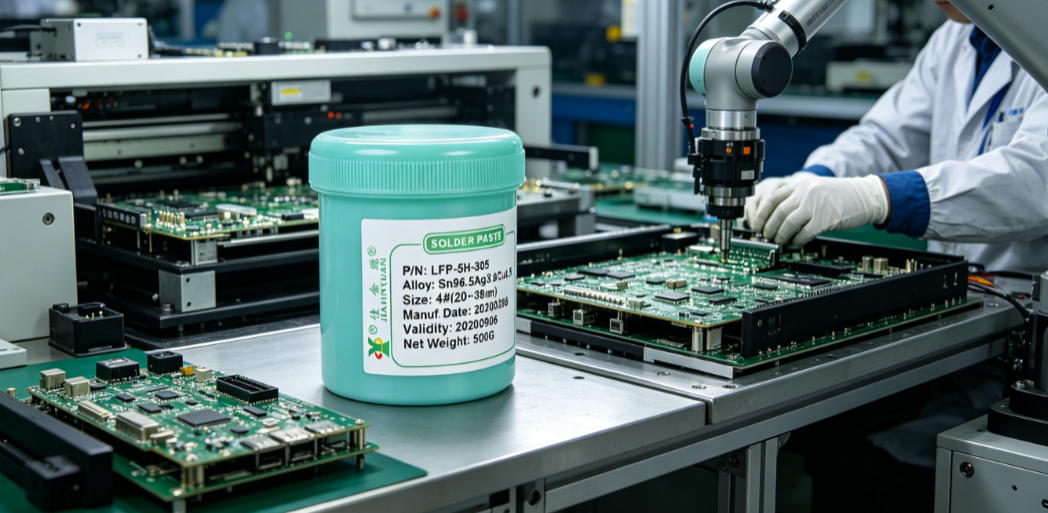
The reliability of SMT solder joints is highly dependent on the compositional design of solder paste alloys. Common misconceptions, such as blindly selecting high-lead replacement materials or neglecting the ratio of trace silver and copper elements, can lead to cold soldering, whisker growth, and thermal fatigue cracking. This article directly addresses five real operational errors on the production line, ranging from alloy element segregation and mismatched reflow windows to the risks of batch mixing. It breaks down the root causes of hazards one by one and provides immediately actionable process correction measures.
Published: 2026-08-27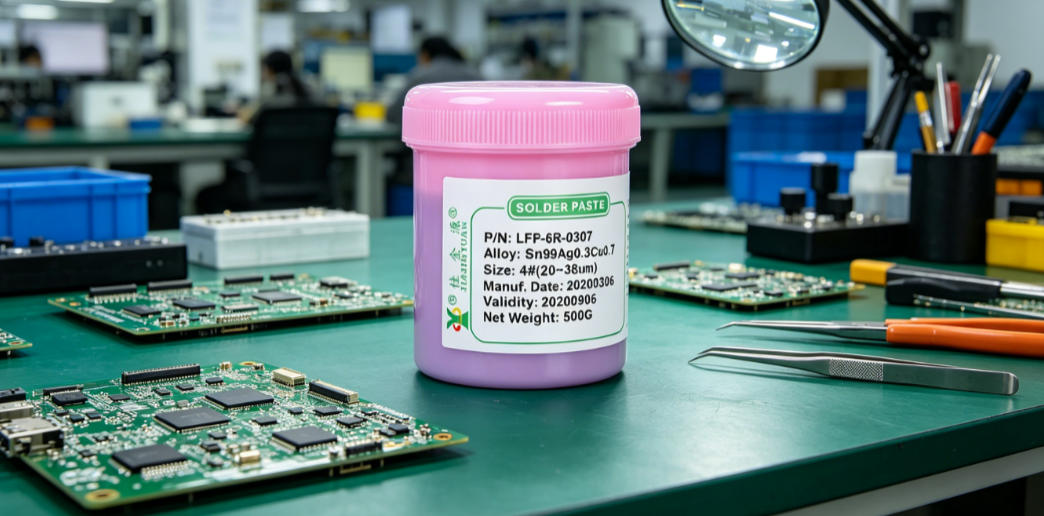
Excessive halogen content in solder paste can cause PCB corrosion, ionic contamination, and CAF failure. Halogen-free SMT production lines require strict control across the entire process chain, from solder paste selection, incoming material inspection, printing parameters, and reflow profile to cleaning processes, with particular attention to the consistency of halogen testing methods, flux residue monitoring, and collaborative verification with suppliers.
Published: 2026-08-27Our technical team is always ready to provide professional solder material selection advice and SMT process solutions.