SMT Solder Paste Manufacturers.

Focused on SMT soldering processes, a one-stop electronic soldering solutions provider.

Here you can find knowledge about Solder Purity, including but not limited to usage methods, installation techniques, troubleshooting and more. Focused on SMT soldering processes. If you can't find what you need, please contact us anytime.

This article details the systematic development of a low odor formula for solder paste, emphasizing practical adjustments to flux chemistry, solvent selection, and activator balance without compromising printability or reflow performance; it outlines how replacing high-volatility terpenes with low-odor glycol ethers, reducing amine-based activators by 15%, and optimizing resin molecular weight distribution collectively cut perceived odor intensity by over 60% while maintaining tack force above 12.5 N and slump below 85 µm after 4 hours at 25°C.
Published: 2026-11-01
This analysis details how trace impurities in solder bar—such as copper, iron, zinc, arsenic, and antimony—degrade solderability, increase dross formation, trigger cold solder joints, and accelerate oxidation during wave or reflow processes, with particular emphasis on threshold concentrations above which mechanical strength drops by more than 12% and intermetallic compound growth accelerates uncontrollably, all while referencing industry-standard IPC-J-STD-006B limits and real-world SMT line failure modes observed across 17 high-volume electronics manufacturing sites.
Published: 2026-11-01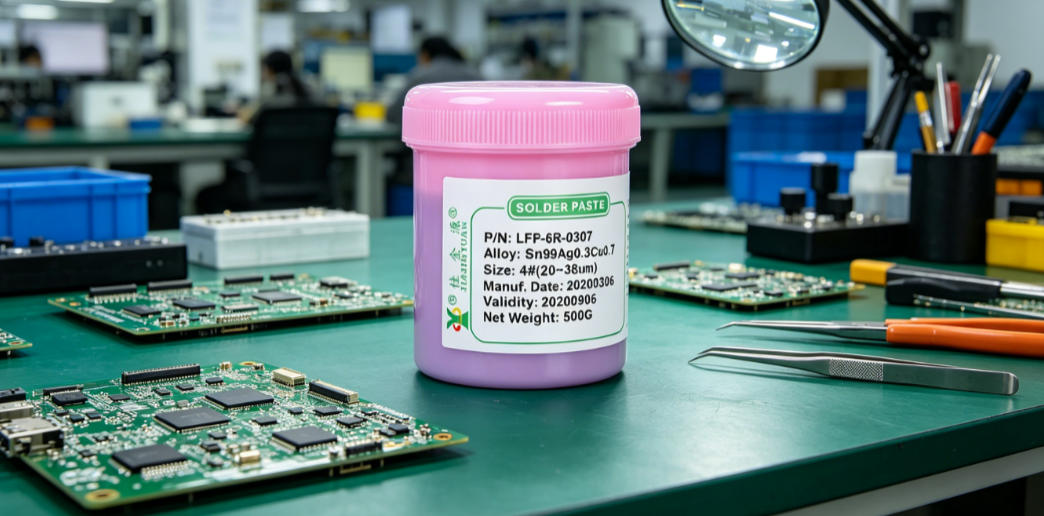
Ensuring coating uniformity on solder wire is essential for consistent flux delivery, stable wetting behavior, and reliable joint formation during automated soldering processes; deviations in coating thickness directly impact solder balling, bridging, and void generation, making real-time visual inspection, cross-sectional microscopy, and gravimetric analysis indispensable verification steps for production line quality control and supplier qualification.
Published: 2026-10-31
This article presents a practical, lab-ready oxidation detection method for solder paste powder, emphasizing visual inspection under controlled lighting, quantitative colorimetric analysis using standardized L*a*b* values, and accelerated aging correlation with solderability testing, all tailored for SMT engineers who need rapid, repeatable assessment of powder integrity without reliance on expensive instrumentation or destructive sampling.
Published: 2026-10-31
Solder Bar thermal cycle stability defines its ability to maintain consistent mechanical integrity, wetting performance, and intermetallic compound formation across repeated heating and cooling cycles, which directly impacts long-term reliability in high-power electronics, automotive modules, and aerospace assemblies where temperature swings from −40 °C to +125 °C occur frequently, and poor stability leads to microcrack propagation, solder joint voiding, and eventual interfacial delamination under thermal fatigue loading.
Published: 2026-10-31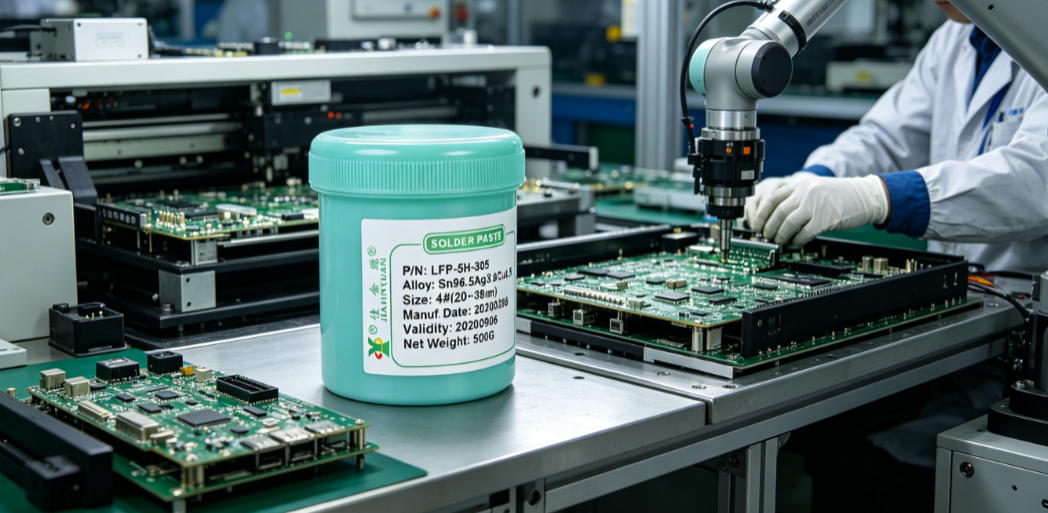
Sn63Pb37 solder wire remains a benchmark eutectic alloy in electronics assembly due to its precise 183°C melting point, excellent wetting behavior, and reliable mechanical joint strength, making it indispensable for hand-soldering, rework, and low-volume SMT applications where leaded alloys are still permitted, especially in aerospace, military, and legacy industrial systems where process repeatability and intermetallic stability outweigh RoHS-driven substitution pressures.
Published: 2026-10-31
Achieving optimal flux activity balance in solder paste is essential for reliable SMT assembly, as excessive activity causes corrosion and residue-related reliability issues, while insufficient activity leads to poor wetting, solder balling, and weak intermetallic formation; this balance depends on the precise formulation of organic acids, halide-free activators, and thermal decomposition kinetics, all calibrated against specific alloy systems, reflow profiles, and pad metallization such as OSP, ENIG, or immersion silver.
Published: 2026-10-30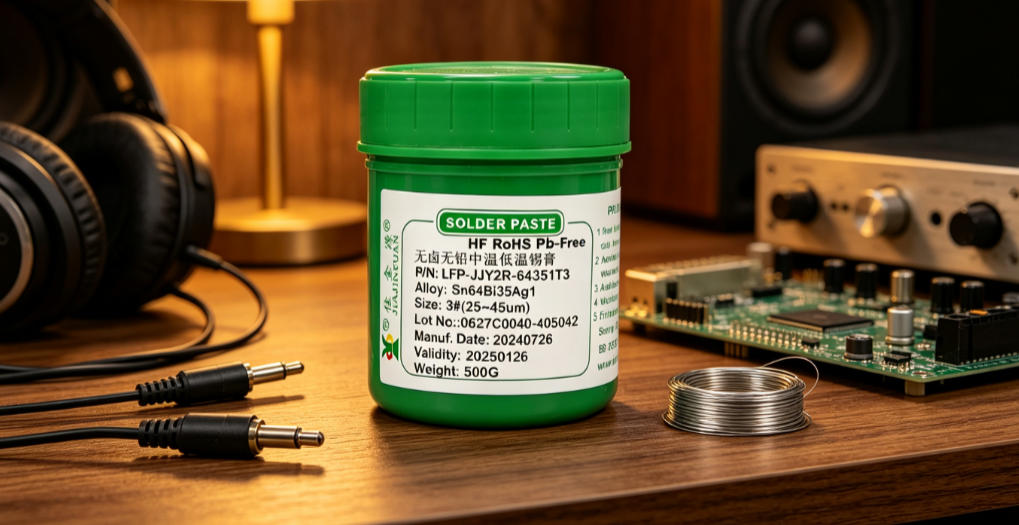
Ensuring batch consistency of solder bar is essential for stable SMT manufacturing, where variations in alloy composition, melting behavior, and surface oxidation across batches can directly trigger defects like cold solder joints, bridging, or inconsistent wetting; rigorous raw material traceability, real-time spectral analysis during ingot casting, controlled cooling rates within ±2°C tolerance, and mandatory cross-batch validation against IPC-J-STD-006 standards collectively form the backbone of reliable solder bar production.
Published: 2026-10-30
This article details the systematic optimization of halogen-free solder wire formulae to meet RoHS and IEC 61249-2-21 compliance while maintaining mechanical reliability, wetting performance, and residue cleanliness; it covers flux core composition tuning, alloy selection trade-offs between SnAgCu variants, thermal stability testing under peak reflow conditions up to 250°C, and real-world validation across high-density PCB assemblies with 0201 passives and fine-pitch QFNs.
Published: 2026-10-30
Low Void Material Design for Solder Paste focuses on minimizing void formation in solder joints through precise control of flux chemistry, metal powder morphology, and rheological behavior, enabling reliable interconnects in high-power and thermally sensitive applications where voids exceeding 10% can compromise thermal conductivity, mechanical strength, and long-term reliability of solder paste assemblies.
Published: 2026-10-30Our technical team is always ready to provide professional solder material selection advice and SMT process solutions.