SMT Solder Paste Manufacturers.

Focused on SMT soldering processes, a one-stop electronic soldering solutions provider.

Here you can find knowledge about Solder Paste Alloy Powder, including but not limited to usage methods, installation techniques, troubleshooting and more. Focused on SMT soldering processes. If you can't find what you need, please contact us anytime.
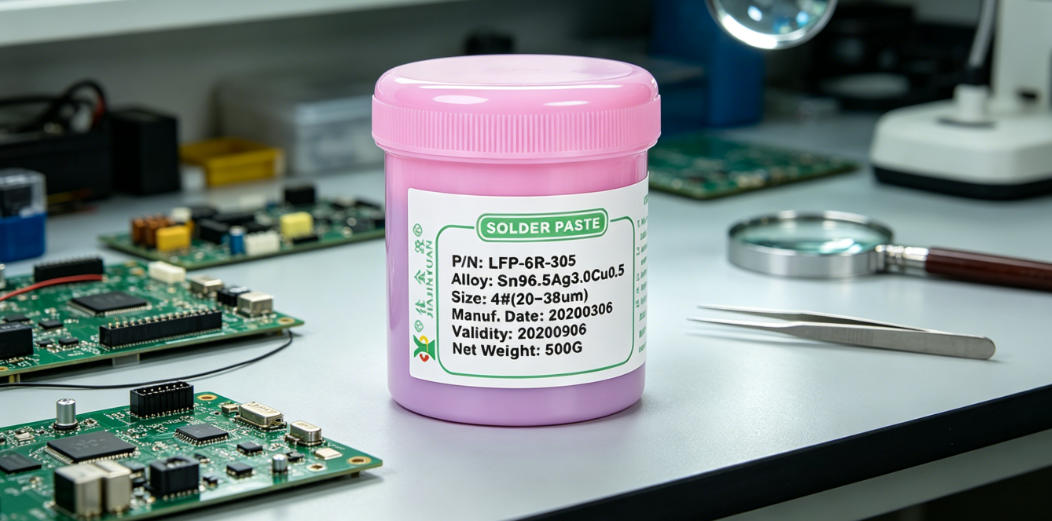
Selecting the right solder paste for fine pitch SMT assembly demands precise matching of activity, halogen level, alloy type, residue behavior, and thermal profile compatibility. This guidance compares high-performance halogen-free solder pastes—specifically 8MQP/5RQ and 8MTSP/5RTS—highlighting how their differing halogen content (under 1500 ppm vs. under 500 ppm), wetting performance (near 100% vs. 70–90%), residue clarity, and process stability directly impact yield in QFN/DFN, mobile, and telecom applications where bridging, voiding, and post-solder cleaning are critical concerns.
Published: 2026-10-18
When selecting between SAC305 and SN63 solder paste for thermal cycling reliability, engineers must weigh melting behavior, intermetallic growth kinetics, fatigue resistance, and microstructure stability—SAC305 offers superior thermal cycling endurance above 1000 cycles due to its Cu-rich intermetallic layer and fine eutectic dispersion, while SN63 excels in low-stress, short-life consumer applications where rapid wetting and minimal reflow energy outweigh long-term crack propagation concerns, making solder paste selection a function of target cycle count, component CTE mismatch, and field service temperature range.
Published: 2026-10-18
Selecting the right solder paste for automotive electronics manufacturing demands balancing thermal reliability, halogen compliance, void control, and process compatibility across diverse subassemblies; high-temperature rosin-based options like 8MQP/5RQ deliver near-perfect wetting for QFNs under harsh reflow profiles, while zero-halogen variants such as 8M9P/5RR minimize voids in thermally critical lighting modules, and water-washable types including 8MWTH/5RWTH support high-cleanliness requirements without solvent disposal costs, making each solder paste selection a direct reflection of component geometry, thermal mass, cleaning infrastructure, and long-term field reliability expectations.
Published: 2026-10-18
When selecting solder paste for fine pitch QFN assembly, engineers must weigh wetting performance, void control, halogen content, residue clarity, and reflow compatibility across real-world production conditions; solder paste A (8MQP/5RQ) delivers near-100% wetting and high activity for demanding thermal pads but carries higher halogen levels, while solder paste B (8MTSP/5RTS) offers lower halogen, cleaner residue, and robust 70–90% wetting—making it preferable for consumer electronics with tighter cleanliness and compliance requirements, especially where post-solder inspection or automated optical inspection is critical.
Published: 2026-10-18
This article introduces a comprehensive portfolio of halogen-free, lead-free solder paste solutions engineered for consistent reliability across pure lead-free and mixed-technology PCB assemblies, covering high-temperature reflow, medium- and low-temperature applications, laser and iron-tip soldering, water-washable cleaning, and specialized stainless steel or aluminum joining; with verified alloy melting points from 65°C to 275°C, halogen content as low as 0 ppm, wetting performance up to 100% on QFN/DFN, and proven resistance to cold/hot slump under high humidity, these solder pastes deliver actionable process stability for SMT engineers managing complex thermal and material compatibility challenges.
Published: 2026-10-17
This guide delivers actionable, field-tested methods to eliminate solder paste bridging during 0201 component placement, emphasizing precise stencil design, controlled printing parameters, and material selection—using verified data such as 50–75 µm stencil thickness, 45–60° squeegee angle, 25–35 mm/s print speed, and T4/T5 alloy powders with particle sizes of 20–38 µm; it integrates real-world constraints like ambient humidity ≤60% RH and paste storage at 0–10°C to ensure consistent rheology and prevent cold slump-induced bridging.
Published: 2026-10-17Maintaining solder paste rheological stability requires strict control of storage temperature, humid
Published: 2026-10-17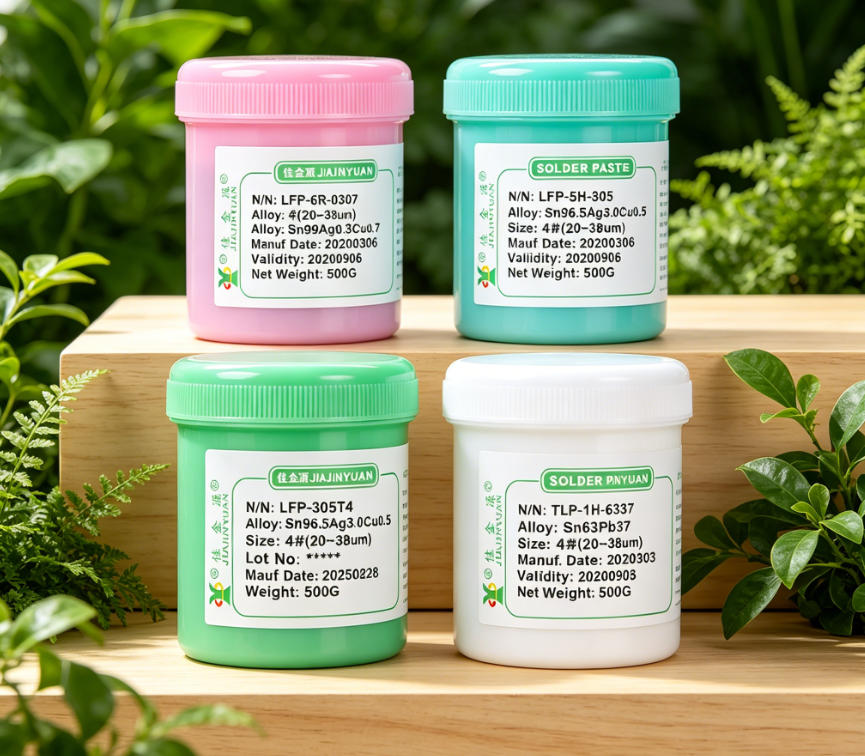
Managing solder paste slump and cold slump is essential for maintaining print fidelity and preventing bridging during reflow preparation, especially with fine-pitch components like QFN/DFN; key factors include storage at 0–10°C, controlled ambient humidity below 60% RH, stencil aperture ratios above 0.66, and viscosity retention within ±15% over 4 hours using T3–T5 alloy powders like 0307 or 305 at 240–260°C peak reflow temperatures.
Published: 2026-10-17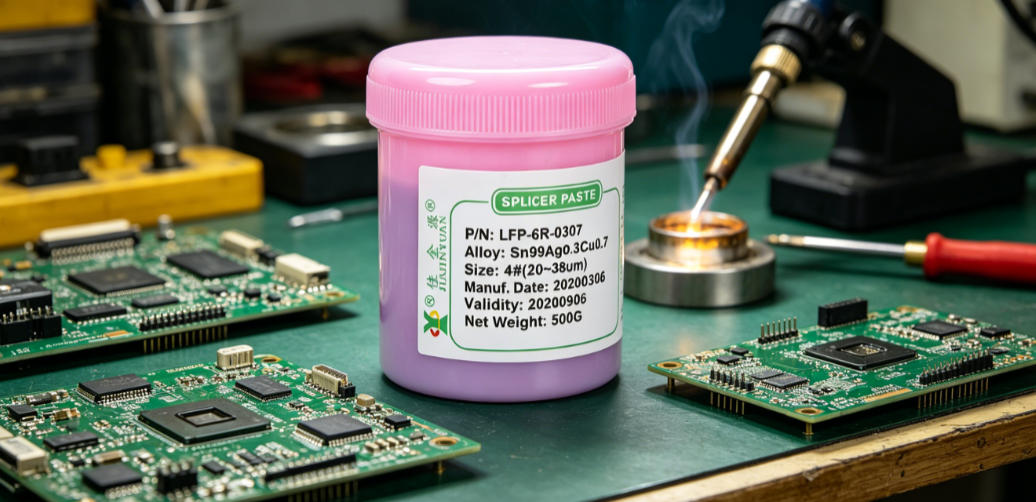
Selecting the right solder paste for fine pitch QFN assembly with stencil printing demands precise matching of alloy type, powder size, activity level, and halogen content to ensure full wetting, minimal voids, and zero bridging; T4 or T5 powder grades like 0307 or 305 are mandatory for 0.4 mm pitch QFNs, while ROL0 halogen-free formulations such as 8M9P/5RR or 8MNTTP/5RNTT deliver high thermal reliability and low residue in telecom and automotive applications.
Published: 2026-10-16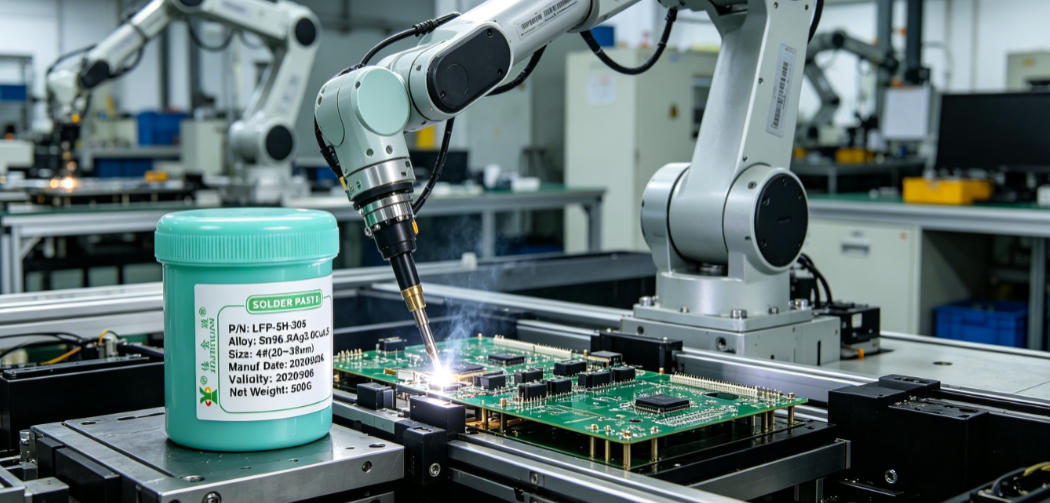
Reliable solder paste performance across lead free and mixed technology PCBs delivers consistent wetting, minimal voiding, and stable rheology under varying thermal and humidity conditions, with halogen-free and zero-halogen options supporting automotive, telecom, and consumer electronics; multiple alloy systems including 0307, 305, Sn64Bi35Ag1, and In52Sn48 enable precise thermal matching from 110°C to 260°C reflow, while T3–T7 powder distributions ensure high-resolution printing for QFN, DFN, and 01005 components without bridging or slump.
Published: 2026-10-16Our technical team is always ready to provide professional solder material selection advice and SMT process solutions.