SMT Solder Paste Manufacturers.

Focused on SMT soldering processes, a one-stop electronic soldering solutions provider.

Here you can find knowledge about Solder Bar Factory, including but not limited to usage methods, installation techniques, troubleshooting and more. Focused on SMT soldering processes. If you can't find what you need, please contact us anytime.
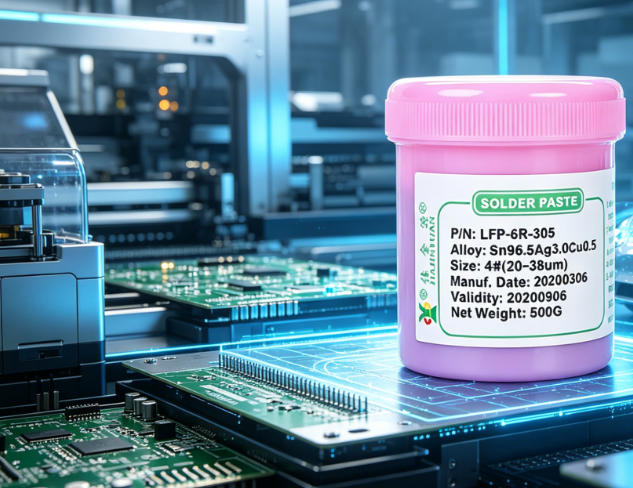
Effective casting defect control for solder bar production hinges on precise alloy composition management, strict temperature profiling during solidification, consistent mold preparation, and real-time monitoring of melt cleanliness, all of which directly impact mechanical integrity, dimensional accuracy, and downstream soldering performance in SMT assembly processes.
Published: 2026-10-29
A precise, step-by-step solder paste printing setup guide tailored for thin PCBs, emphasizing real-world process stability, void minimization, and consistent transfer efficiency; highlights halogen-free, zero-halogen, water-washable, and laser-compatible solder paste series with verified alloy melting points, wetting performance up to 100%, and proven cold/hot slump resistance under high humidity—designed for SMT engineers working with QFN/DFN, mobile devices, automotive lighting, and ultra-thin flex boards.
Published: 2026-10-29
Low spatter solder paste directly enhances first pass yield by minimizing solder ball formation, reducing bridging, and improving stencil release consistency across fine-pitch QFN/DFN and 01005 components; its optimized rheology, controlled volatile content below 8.5%, and T4/T5 alloy powder distribution with particle size D50 = 20–25 µm enable stable printing at 1.0–1.2 mm/sec speed, 45° scraper angle, and 50–60 kPa pressure while maintaining viscosity between 650–750 Pa·s at 25°C.
Published: 2026-10-28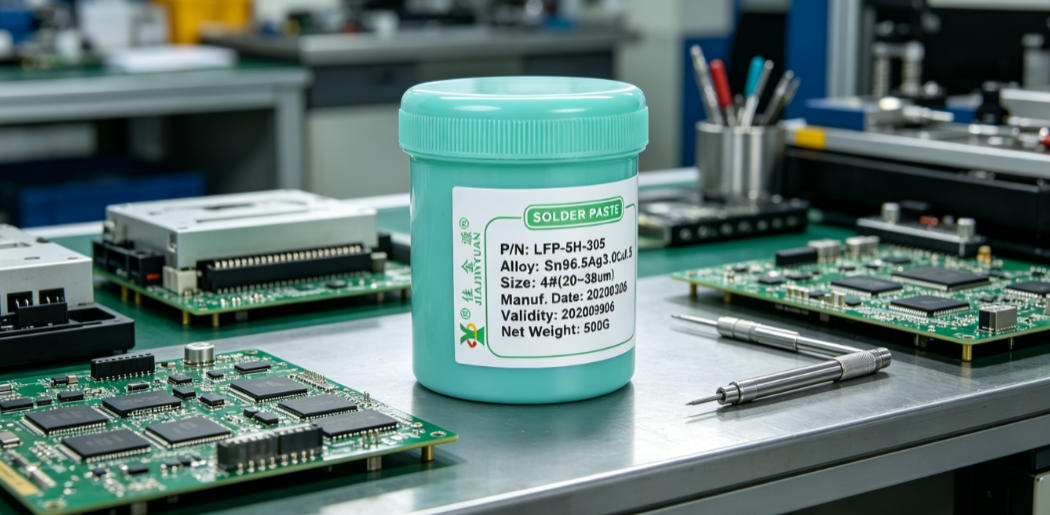
Choosing between solder paste and solder wire for mixed-technology PCB rework hinges on thermal profile control, joint geometry, flux activity, and residue management. Solder paste excels in QFN/DFN reballing and fine-pitch BGAs where precise volume control and uniform wetting—up to 100% with 8MQP/5RQ series—are critical, while solder wire remains practical for through-hole or large-pad hand-soldering at 240–260°C with Sn96.5Ag3Cu0.5 alloy. Key differentiators include paste viscosity stability over 8 hours, T4/T5 powder size distribution for stencil release, and halogen content under 500 ppm for high-reliability telecom or automotive applications.
Published: 2026-10-27
Selecting the right solder paste alloy directly governs thermal fatigue life in electronic assemblies, where mismatched melting behavior, coefficient of thermal expansion (CTE) compatibility, and intermetallic compound (IMC) growth kinetics determine field reliability; high-temperature alloys like 305 or 0307 deliver superior creep resistance under repeated thermal cycling but increase thermal stress on fine-pitch components, while low-temperature options such as Sn42Bi58 or In52Sn48 reduce peak stress yet suffer from brittle fracture and accelerated IMC spalling at elevated operating temperatures, making alloy choice a decisive trade-off between mechanical robustness and thermal margin.
Published: 2026-10-27
This practical guide delivers actionable reflow profile tuning strategies specifically engineered for modern solder paste formulations, emphasizing how precise thermal management unlocks the full potential of halogen-free, lead-free, and ultra-low-temperature alloys; it details measurable benefits including 90–100% wetting on QFN/DFN packages, void reduction to <2% in automotive lighting, water-washable residue removal in under 90 seconds, and stable viscosity over 8-hour print runs, all grounded in verified alloy melting ranges from 65°C to 275°C and real-world process windows.
Published: 2026-10-26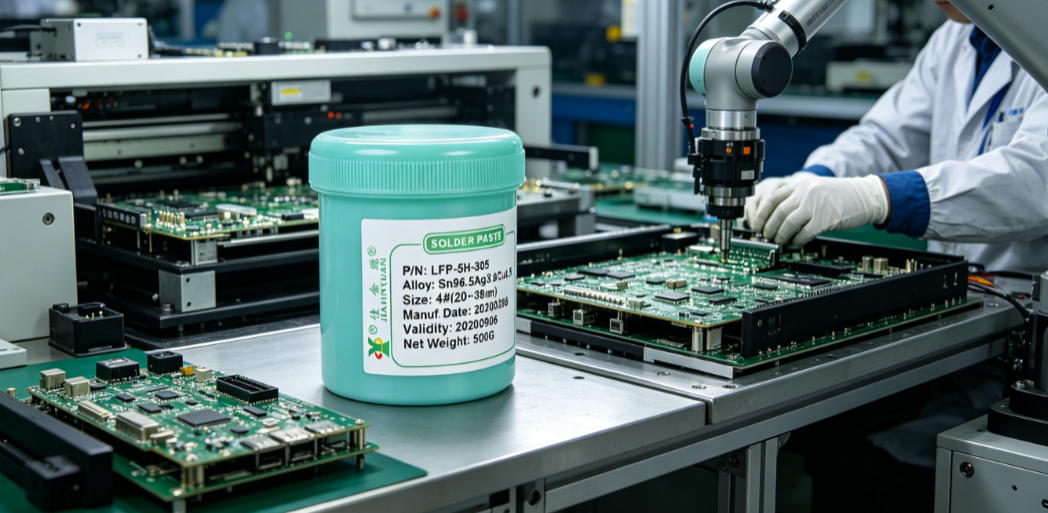
This guide cuts through solder paste selection confusion by directly comparing 19 series across real-world SMT production needs—halogen content, temperature profile, residue clarity, cleaning method, alloy compatibility, and application specificity—so engineers can match solder paste to their exact process constraints without over-engineering or under-specifying.
Published: 2026-10-22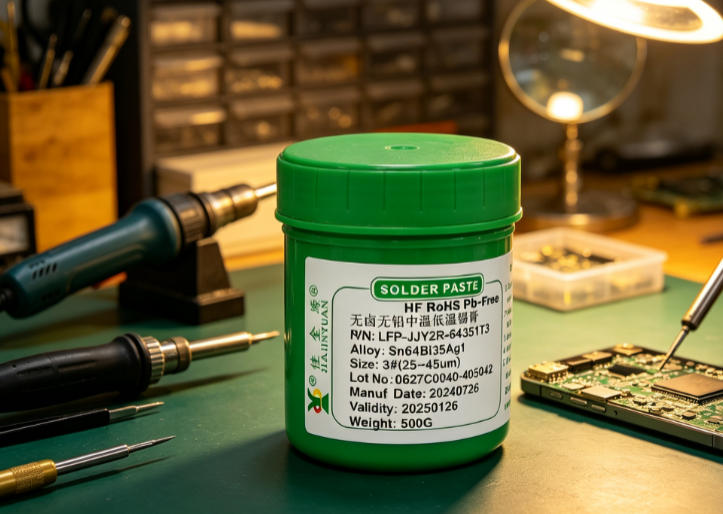
Solder paste offers superior process scalability, precise volume control, and compatibility with high-speed SMT lines compared to solder preforms, especially in high-volume production where printing consistency, alloy flexibility, and void reduction are critical; advanced halogen-free, lead-free formulations like 8M9P/5RR achieve near-zero void rates below 2% for automotive lighting, while water-washable variants such as 8MWTH/5RWTH maintain stable viscosity over 8-hour print runs and reduce cleaning time by 40% versus solvent-based alternatives.
Published: 2026-10-22Water soluble solder paste significantly boosts assembly yield by enabling rapid, residue-free post-solder cleaning without aggressive solvents, maintaining consistent viscosity over 8-hour printing windows, delivering cold slump resistance below 0.15 mm at 25°C and hot slump resistance above 180°C, supporting high-precision QFN/DFN placement with wetting rates up to 99%, and reducing void formation to under 3% in automotive lighting applications when paired with optimized reflow profiles between 235–255°C for 305 alloy systems.
Published: 2026-10-22
Setting reflow profiles for lead free solder paste demands precise alignment between alloy melting behavior, flux activation kinetics, and component thermal limits; this article compares 19 solder paste series across melting range, halogen content, residue type, application sensitivity, and process compatibility to guide SMT engineers in selecting the right profile parameters—whether for high-reliability automotive modules requiring void-free joints with 8M9P/5RR, fine-pitch mobile devices needing ultra-low residue from 8MNTTP/5RNTT, or low-temperature LED assemblies using 8M/2R with Sn42Bi58 alloy at 138°C melt point.
Published: 2026-10-21Our technical team is always ready to provide professional solder material selection advice and SMT process solutions.