What problems may occur after the production of low-temperature tin wire is completed?
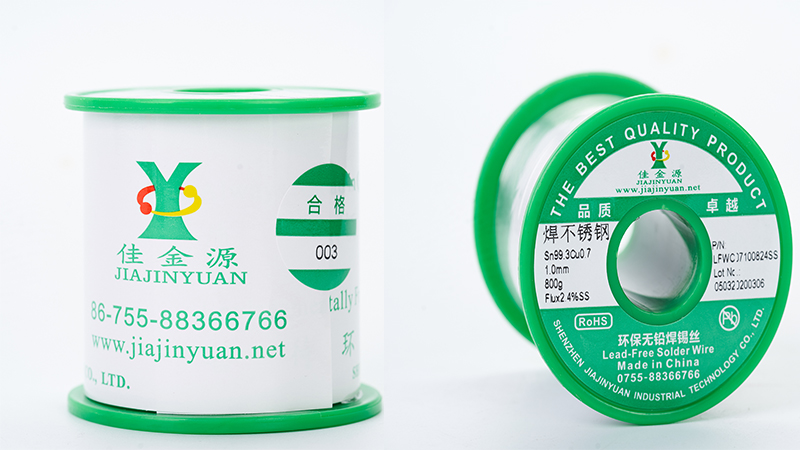
What are the more common problems that may occur after the production of tin wire (i.e., the finished tin wire)? How should these problems be solved?Low-temperature tin wireThis is no exception. Shenzhen JJY is here to provide an analysis and solution for our partners:
Tin wireDuring the entire process of wire drawing, some surface treatment work will be carried out to ensure that the surfaces of tin wires of different degrees are relatively bright and smooth. Then, the winding is carried out. Because during the winding process, the tin wire basically has to pass through several gears before it can be wound on the rubber roller. However, if the gears are very dirty and there is grease or other moisture on the tin wire, it will cause the tin wire to turn black and oxidize.
When the warehouse for storing tin is too damp and cold, the surface of the tin wire will also turn black and oxidize. The application of such products does not look much different. Generally, the application can be completed. The tin wire is also prone to unevenness after gear damage.
The cleanliness and elegance of the tin wire are the basic standards required by manufacturers. The management of machinery and equipment, the operation of processing techniques, the operation of staff, and the tin wire are all related. In the face of this situation, efforts can only be made to minimize it.
Tin wire has joints. During winding, due to its relatively thin wire diameter, the winding tension is also relatively large, and the winding speed is relatively fast, all these details can lead to the phenomenon of the wire breaking during winding. In order to be able to wind an entire bundle, the two ends of the tin wire can only be joined together and then wound again. The tin wire with joints does not affect the general quality of the electric welding.
In the electric welding process of the automatic welding machine, as the tin wire needs to be fed automatically, it is very likely that the joint will get stuck due to being too large, which will cause trouble. However, this section can be broken. For customers with stricter requirements, the tin wire can be picked out by screening to reduce the lack of joints in the middle.
Want to know about tin wire, low-temperature tin wireSolder pasteFor any other questions regarding solder bars, flux paste, solder rods, etc., partners are welcome to come and consultShenzhen Jiajin Qianyuan Industrial Technology Co., LTDLet's learn and grow together!
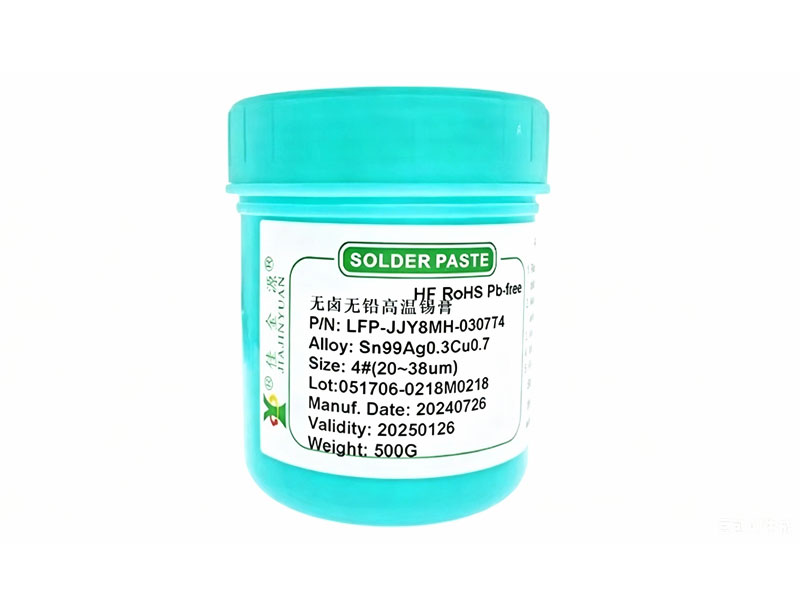
LFP-JJY8MH-0307T4 halogen-free and lead-free high-temperature solder paste
LFP-JJY8MH-0307T4 is a halogen-free and lead-free high-temperature solder paste launched by JIAJINYUAN/JJY. It adopts Sn99Ag0.3Cu0.7 alloy formula with 4# particle size (20-38μm), features weak activi
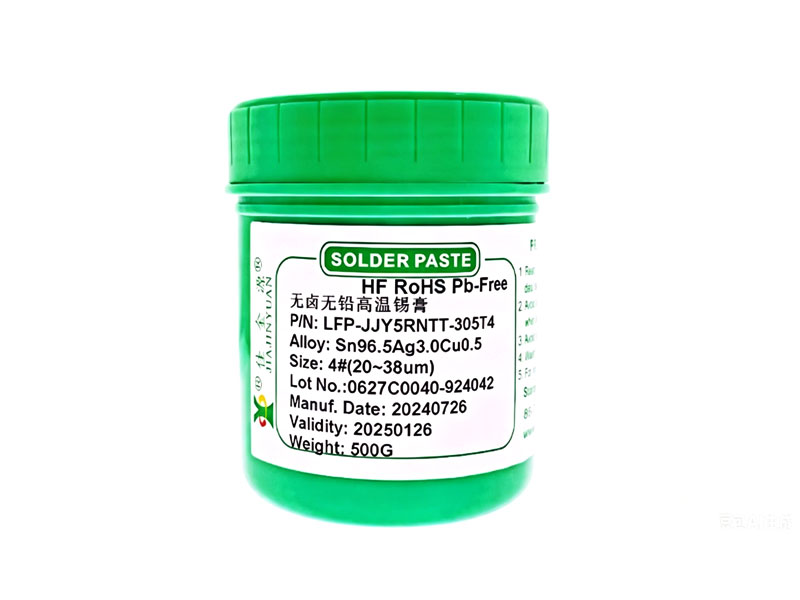
LFP-JJY5RNTT-305T4 halogen-free and lead-free high-temperature solder paste
LFP-JJY5RNTT-305T4 is a halogen-free and lead-free high-temperature solder paste developed by JIAJINYUAN/JJY. Formulated with Sn96.5Ag3.0Cu0.5 alloy, it adopts 4# (20-38μm) powder particle size, featu
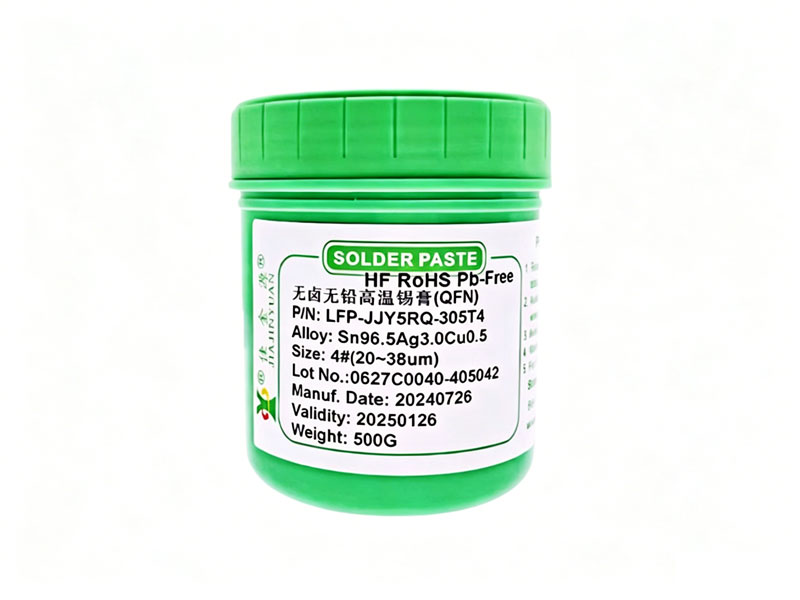
LFP-JJY5RQ-305T4 halogen-free and lead-free high-temperature solder paste
LFP-JJY5RQ-305T4 is a halogen-free and lead-free high-temperature solder paste from JIAJINYUAN/JJY. Adopting Sn96.5Ag3.0Cu0.5 alloy composition with 4# particle size, it features high activity, stable